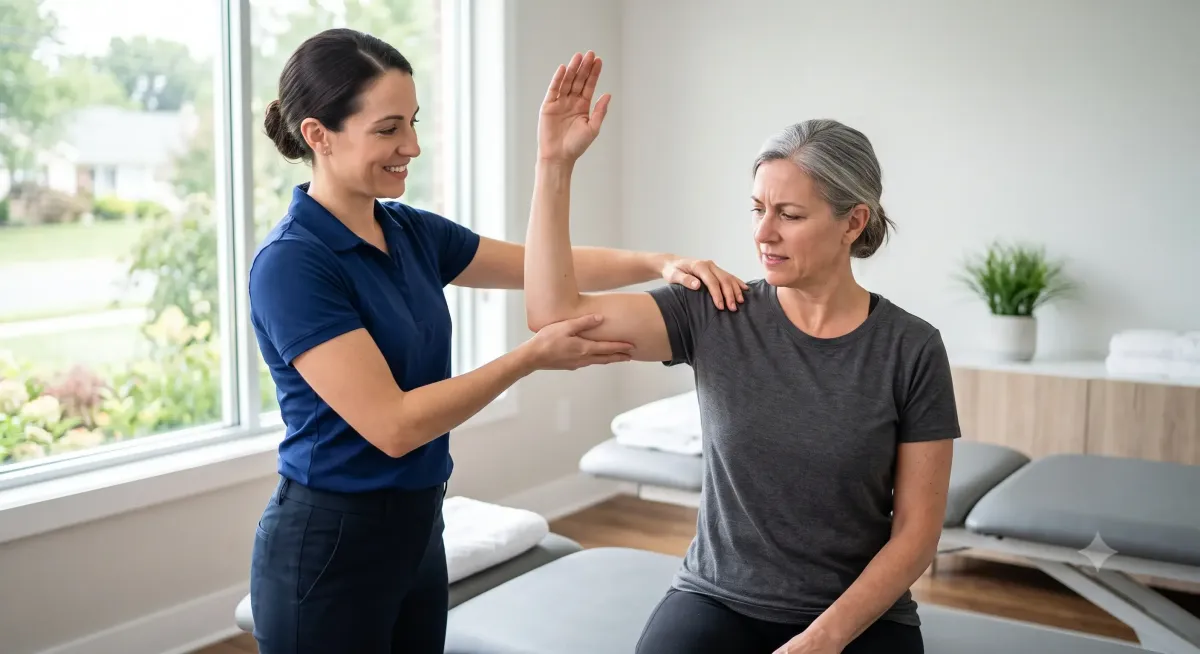
Frozen Shoulder Physical Therapy in NJ | NJ Rehab Experts
Frozen Shoulder Physical Therapy in NJ
If your shoulder has slowly become stiff, painful, and hard to move, you may have frozen shoulder, and physical therapy is the most effective non-surgical way to restore your movement and relieve the pain. A frozen shoulder rarely improves on its own quickly, but the right hands-on therapy and stretching program can gradually free up the joint and get your arm working again. At NJ Rehab Experts across New Jersey, our licensed doctors of physical therapy treat frozen shoulder with a structured, proven approach tailored to whatever stage you are in.
Frozen shoulder is uniquely frustrating because it creeps up on you. It often starts as a dull ache, then slowly your shoulder gets tighter and tighter until reaching behind your back, fastening a seatbelt, or lifting your arm overhead becomes genuinely difficult. The good news is that frozen shoulder is very treatable, and most people recover full or near-full movement with the right care.
This guide explains what frozen shoulder is, its stages, why physical therapy is the key treatment, and what to expect at our New Jersey clinics.
What Is Frozen Shoulder?
Frozen shoulder, known medically as adhesive capsulitis, is a condition where the capsule of tissue surrounding the shoulder joint thickens and tightens. This tightening restricts movement and causes pain, and it tends to develop gradually rather than from a single injury.
It most often affects people between 40 and 60, and it is more common in women and in people with diabetes or thyroid conditions. It can also develop after a period of keeping the shoulder still, such as after an injury, surgery, or illness that limited your movement.
The hallmark of frozen shoulder is a loss of both active and passive motion. In plain terms, that means you cannot move the arm freely yourself, and someone else cannot move it freely for you either, because the joint itself has tightened. This is what sets it apart from other shoulder problems.
What Are the Stages of Frozen Shoulder?
Frozen shoulder typically moves through three stages, and knowing which stage you are in shapes your treatment.
The freezing stage. Pain gradually increases and the shoulder starts to lose motion. This stage can last several weeks to months and is often the most painful.
The frozen stage. The pain may actually ease somewhat, but stiffness is at its worst. Daily activities become difficult because the range of motion is so limited.
The thawing stage. Motion slowly begins to return and the shoulder gradually improves.
Left completely alone, this whole cycle can drag on for a year or more. This is exactly why physical therapy matters. The right treatment at each stage can reduce the pain, protect the motion you have, and speed up the return of movement.
Why Is Physical Therapy the Key Treatment for Frozen Shoulder?
For frozen shoulder, physical therapy is not just helpful, it is the core of recovery. Here is why.
It restores lost motion. The central problem in frozen shoulder is a tightened joint capsule. Skilled manual therapy and targeted stretching gradually free up that capsule and bring back range of motion, which nothing else does as directly.
It manages pain at each stage. Therapy uses hands-on techniques and modalities to control pain, especially in the painful freezing stage, so you can keep the joint moving.
It protects the motion you have. Frozen shoulder gets worse when the joint stays still. A therapist keeps you moving safely so the stiffness does not deepen.
It speeds up the timeline. While frozen shoulder can resolve eventually on its own, therapy often shortens that long process considerably and leads to a fuller recovery of movement.
How Do the Treatment Options Compare?
Here is a look at the main approaches to frozen shoulder and where physical therapy fits.
For the large majority of people, physical therapy, often paired with a doctor's care for pain, resolves frozen shoulder without surgery.
What Does Frozen Shoulder Treatment Look Like at NJ Rehab Experts?
When you come to us for frozen shoulder, here is how your care works.
Step 1: Evaluation and Staging
Your therapist examines your shoulder, measures your range of motion, and determines which stage you are in. This is important because the freezing, frozen, and thawing stages each call for a different balance of pain management and stretching.
Step 2: A Stage-Appropriate Plan
In the painful freezing stage, we focus more on managing pain and gently maintaining motion. In the frozen and thawing stages, we push more actively on restoring range of motion. Your plan adapts as you progress.
Step 3: Hands-On Treatment and Home Program
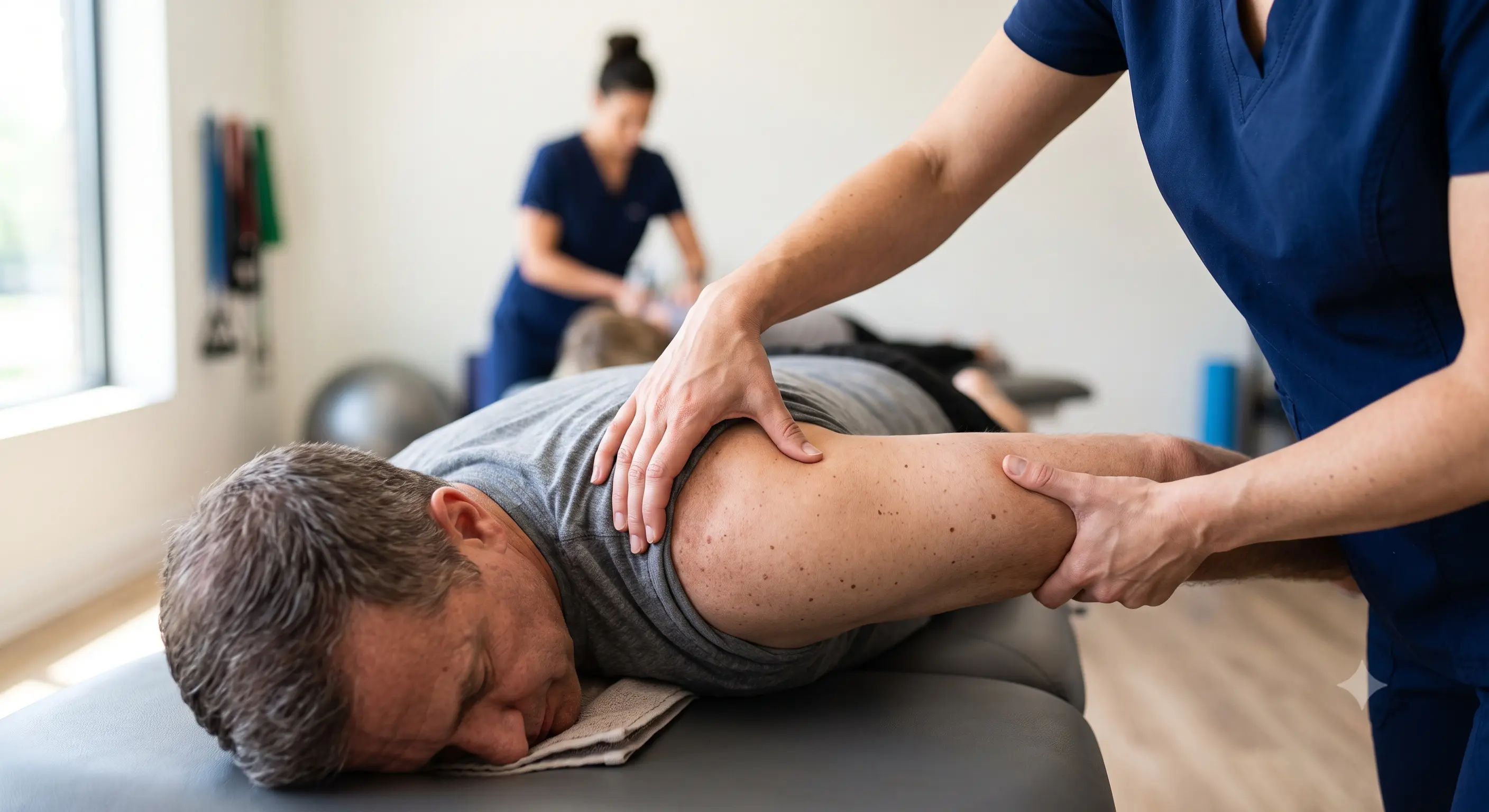
Your sessions combine manual therapy to mobilize the joint, guided stretching, and strengthening as motion returns. We also teach you a home stretching routine, which is essential for frozen shoulder, since consistent daily movement is what keeps the recovery going between visits.
Step 4: Progress Tracking
We measure your range of motion over time so you can see the improvement, and we adjust the plan as your shoulder thaws.
How Long Does Recovery Take?
Frozen shoulder is a slower recovery than most shoulder problems, and it is important to be realistic. With consistent physical therapy, many people see meaningful improvement over the course of several weeks to a few months, though a full recovery of motion can take longer depending on the stage you started in and how long it had progressed.
The single most important factor is consistency. Frozen shoulder responds to steady, regular movement and stretching. Patients who keep up their sessions and do their home program recover more fully and more quickly than those who start and stop. The earlier you begin treatment, the more you can limit the stiffness and shorten the overall timeline.
Serving Communities Across New Jersey
NJ Rehab Experts has four convenient locations across New Jersey, so quality frozen shoulder care is close to home wherever you are.
Our Jersey City clinic at 610 Washington Blvd serves Hoboken and Bayonne. Our Clifton office at 1117 RT 46 covers Passaic, Paterson, and Wayne. Our Secaucus office at 20 Meadowlands Pkwy serves the surrounding Meadowlands area. And our West Windsor office at 186 Princeton Hightstown Rd is convenient for Princeton and East Brunswick.
No matter which clinic you choose, you receive the same expert care from our licensed doctors of physical therapy. You can find directions and hours for all four clinics on our locations page, or meet our therapists on our team page. Frozen shoulder care is part of our broader orthopedic physical therapy program.
Frequently Asked Questions
How do I know if I have frozen shoulder or a rotator cuff problem? The key difference is that frozen shoulder limits motion even when someone else tries to move your arm, because the joint itself is tight. A rotator cuff problem usually allows more passive motion. A proper evaluation confirms which one you have.
Is frozen shoulder treatment painful? Treatment is tailored to your comfort level and your stage. In the painful early stage we work gently. As the shoulder thaws, stretching may feel like a firm pull, but it should never be forced past what is safe. Your therapist adjusts to you.
Can frozen shoulder go away on its own? It sometimes resolves eventually, but this can take a year or more, and some people are left with lasting stiffness. Physical therapy shortens the process and improves how much motion you get back.
Do I need a referral to start? In most cases you can begin directly, though some insurance plans require a doctor's referral. Our team checks your benefits and lets you know before your first visit.
Will I need surgery? Rarely. The large majority of frozen shoulders resolve with physical therapy and conservative care. Surgery is reserved for the small number of cases that do not respond over time.
How often will I need to come in? Most patients start with two to three visits per week, combined with daily home stretching. Your therapist sets a realistic schedule after your evaluation.
Start Moving Freely Again
Frozen shoulder can feel like it will never loosen up, but with the right treatment, it does. Physical therapy is the proven path back to a shoulder that moves and feels normal again, and the sooner you start, the smoother that path tends to be.
Call NJ Rehab Experts today at (973) 954-5113 or book your appointment online. Same-week appointments are available at most of our locations, and we will verify your insurance benefits before you arrive. With over 15 years of experience and four convenient locations across New Jersey, we are here to help you move freely again.
