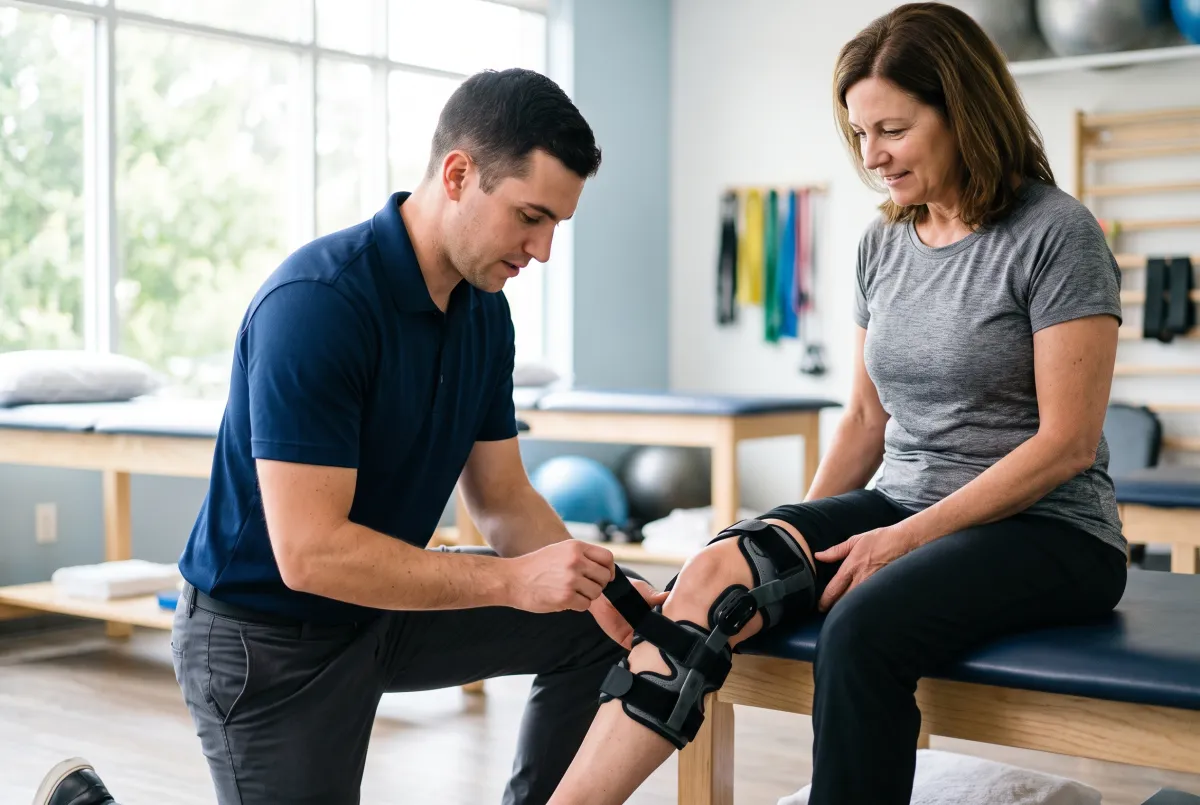
Custom Bracing in Edison, NJ
If you are looking for custom bracing in Edison, NJ Rehab Experts selects and fits braces at our Iselin clinic on Route 1, just minutes from Edison. A custom-fitted brace is chosen for your specific injury and adjusted to your body, so it stabilizes the joint, eases pain, and protects healing tissue without slipping or pinching the way a one-size-fits-all drugstore brace often does. Your brace is fitted by a licensed clinician and paired with therapy, so you get stronger and need less support over time.
When a joint is injured, the wrong support can be almost as frustrating as none at all. A store-bought brace slides down your leg by lunchtime, digs into your skin, or holds the joint in a way that does not match your injury. The right brace, fitted properly, lets you keep moving during recovery with much more confidence.
This guide covers what custom bracing is, which injuries it helps, how the fitting works, and how it compares with an off-the-shelf brace. If you are new to our clinic, our guide to physical therapy in Edison explains the full range of care we provide, and our spinal decompression guide for Edison covers non-surgical care for disc and nerve pain.
What Is Custom Bracing?
Custom bracing is the process of selecting and fitting an orthopedic brace or support for your body and your injury. Instead of guessing at a size on a store shelf, a clinician evaluates the injured joint, decides what kind of support it needs, and fits the brace so it does its job.
That job depends on the injury. Some braces add stability to a loose or recently repaired joint. Some take pressure off a painful area. Others protect healing tissue while you get back to daily activity. You can read more on our custom bracing page.
Which Injuries Does Custom Bracing Help?
Custom bracing supports a wide range of joint injuries and conditions. It commonly helps with:
- Knee injuries. Stabilizes the knee after ligament injuries or knee surgery. - Ankle sprains. Supports and protects the ankle while the ligaments heal. - Wrist and hand injuries. Supports or immobilizes the joint after sprains and strains. - Arthritis. Offloads a painful, arthritic joint so you can keep moving. - Post-surgical recovery. Protects a repaired joint during the early weeks of rehab. - Sports injuries. Adds protection so athletes can return to activity safely.
How Does the Fitting Process Work?
Getting the right brace takes four steps:
1. Assess the injury. Your clinician evaluates the injured joint, how you move, and what you need to get back to, whether that is work, sport, or simply walking without pain. 2. Match the right brace. We select a brace for your specific condition, depending on whether you need stability, offloading, or protection. 3. Fit it precisely. The brace is fitted and adjusted to your body so it supports the joint without slipping, pinching, or restricting the wrong movement. 4. Show you how to use it. We explain when to wear it and when to take it off, so it supports your recovery instead of getting in the way.
Custom Brace vs. Off-the-Shelf Brace
A pharmacy brace is better than nothing, but fit and support matter. Here is how they compare:
Custom-fitted brace | Off-the-shelf brace | |
|---|---|---|
Fit | Adjusted to your body | One size fits most, often loose or too tight |
Matched to your injury | Yes, selected after an evaluation | No, chosen by size or general area |
Stays in place | Designed not to slip or pinch | Often slides or bunches during the day |
Who chooses it | A licensed clinician | You, from a shelf |
Part of a recovery plan | Yes, paired with strengthening | Usually used on its own |
Bracing works best as part of a full rehab plan, not a replacement for one. That is why every patient starts with a thorough assessment.
Will a Brace Make My Muscles Weaker?
Not when it is used correctly. This is one of the most common worries, and it is a fair one. A brace worn all day for months without exercise can let muscles get lazy.
That is why we pair bracing with a strengthening program. The brace protects the joint while you rebuild strength, and as you get stronger, the goal is to wear it less. Many plans start with the brace on for most activities and gradually reduce it to higher-risk moments only, such as sport or heavy lifting.
How Long Will I Need to Wear a Brace?
It depends on your injury and how your recovery goes. Some braces are worn only during activity, while others are worn through the early stage of healing. Your clinician will tell you what to expect after your evaluation and adjust the plan as you progress.
What Should I Ask Before Getting a Brace?
Wherever you get your brace, these questions help you get the right one:
Will a clinician examine my injury before choosing the brace?
Is the brace matched to my specific condition, or just to my size?
Will someone fit and adjust it on me, and show me how to put it on?
When should I wear it, and when should I take it off?
Will I also get exercises so I eventually need the brace less?
Will you check my insurance coverage before I start?
Custom Bracing Near Edison
Our Iselin clinic at 485 Route 1, Building A, Ste 200, Iselin, NJ 08830 is just minutes from Edison, whether you are coming from north Edison, the Oak Tree area, or anywhere in between. It is close to Route 1, the Garden State Parkway, and the Metropark train station. The Iselin clinic is open Monday, Wednesday, and Friday from 10:00 AM to 6:00 PM, with care in English and Spanish. Find directions on our Iselin location page.
Bracing is usually one part of a bigger plan. Depending on your injury, your care may also include sports physical therapy, orthopedic physical therapy, or injury rehabilitation. Meet the clinicians who will treat you on our team page.
Frequently Asked Questions
Why not just buy a brace from the pharmacy?
A generic brace is made to fit most people and may not support the right structures for your injury. A custom-fitted brace is matched to your condition and adjusted to your body, so it supports the joint properly without slipping or pinching.
Can I stay active while wearing a custom brace?
Yes, that is one of the main goals. The right brace stabilizes and protects the joint so you can keep moving during recovery. Your clinician will tell you which activities are appropriate at each stage.
Do I need a brace after knee or ankle surgery?
Many patients do, especially in the early weeks, but it depends on the surgery and your surgeon's instructions. We coordinate your brace with your post-surgical rehab plan.
Do I need a referral?
In New Jersey you can often start physical therapy through direct access without a referral, though some insurance plans require one. We check your plan before your first visit.
Is custom bracing covered by insurance?
Bracing coverage varies by plan. Our team verifies your benefits and explains any costs before you begin. You can start on our insurance verification page.
How far is the clinic from Edison?
Our Iselin clinic on Route 1 is just minutes from Edison and easy to reach by Route 1, the Garden State Parkway, or from the Metropark train station.
Book Your Bracing Evaluation
You do not have to put up with a brace that slips, pinches, or does not help. An evaluation will tell you what kind of support your injury needs and how to get you moving with confidence again, just minutes from Edison.
Call NJ Rehab Experts at (973) 954-5113 or book your appointment online. We will verify your insurance benefits before you arrive.
You can also reach the team through our contact page.
