Dry Needling and Shockwave Therapy in NJ | NJ Rehab Experts
Dry Needling and Shockwave Therapy: Advanced Pain Relief Without Medication
When muscle pain, chronic tendon problems, or stubborn trigger points are not responding to traditional stretching, exercise, and manual therapy, it may be time to try something more targeted. Dry needling and shockwave therapy are two of the most effective advanced treatments available in physical therapy today, and at NJ Rehab Experts, both are performed in-office by your licensed physical therapist as part of your personalized treatment plan.
These are not experimental treatments. They are backed by research, widely used in orthopedic and sports rehabilitation, and have helped thousands of patients find relief from conditions that were not improving with conventional approaches alone. If you have been dealing with persistent pain and want to understand whether dry needling or shockwave therapy could help, this guide covers everything you need to know.
What Is Dry Needling?
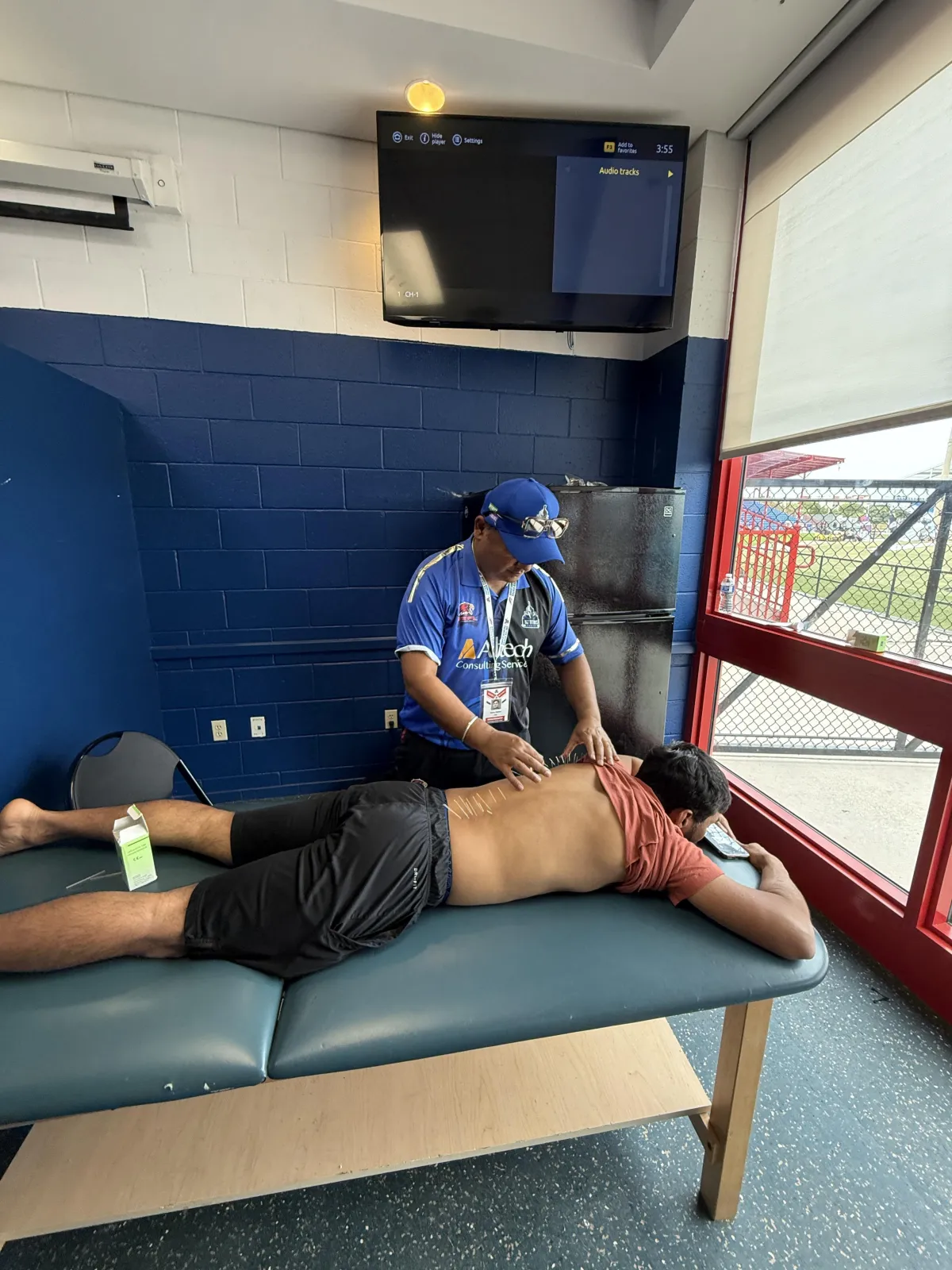
Dry needling is a skilled technique where a physical therapist inserts a thin, sterile, solid filament needle into a myofascial trigger point, a tight, irritable knot within a muscle that causes local pain and often refers pain to other areas of the body. The needle itself does not inject anything (that is why it is called "dry"), but it creates a precise mechanical stimulus that releases the contracted muscle fibers, improves blood flow, and triggers a healing response.
When the needle enters a trigger point, you may feel a brief muscle twitch. That twitch is actually a good sign. It means the therapist has located the exact point of tension, and the muscle is releasing. Most patients describe the sensation as a deep ache or a quick cramp that lasts only a second or two.
How Dry Needling Is Different from Acupuncture
This is one of the most common questions we hear. While both treatments use thin needles, they are fundamentally different in their approach and purpose.
Acupuncture is rooted in traditional Chinese medicine and involves placing needles along energy meridians to restore the flow of qi throughout the body. Dry needling is based on modern musculoskeletal anatomy and neuroscience. Your physical therapist identifies specific trigger points through a physical examination, then targets those exact points to release muscle tension and reduce pain.
The training is also different. Dry needling is performed by licensed physical therapists with advanced training in musculoskeletal assessment and needle technique. Your therapist understands the anatomy of every muscle, nerve, and blood vessel in the area being treated, and they use that knowledge to deliver precise, safe treatment.
Conditions That Respond Well to Dry Needling
Dry needling is effective for a wide range of musculoskeletal conditions. Here are the ones we treat most frequently at our clinics:
Neck pain and cervicogenic headaches. Trigger points in the upper trapezius, levator scapulae, and suboccipital muscles are among the most common causes of tension headaches and neck stiffness. Dry needling these areas often provides immediate and lasting relief.
Shoulder pain. Rotator cuff tendinitis, shoulder impingement, and frozen shoulder often involve trigger points in the surrounding muscles that contribute to pain and restricted movement.
Low back pain. The lumbar paraspinals, quadratus lumborum, and gluteal muscles frequently develop trigger points that cause or worsen low back pain and sciatica symptoms.
Tennis elbow and golfer's elbow. Chronic forearm pain from repetitive use responds well to dry needling of the wrist extensors and flexors.
IT band syndrome and knee pain. Trigger points in the quadriceps, hamstrings, and calf muscles can contribute to knee pain and IT band tightness.
Plantar fasciitis. Dry needling the calf and intrinsic foot muscles can reduce the tension contributing to heel and arch pain.
TMJ and jaw pain. Trigger points in the masseter and temporalis muscles are common in patients who clench or grind their teeth.
What Is Shockwave Therapy?
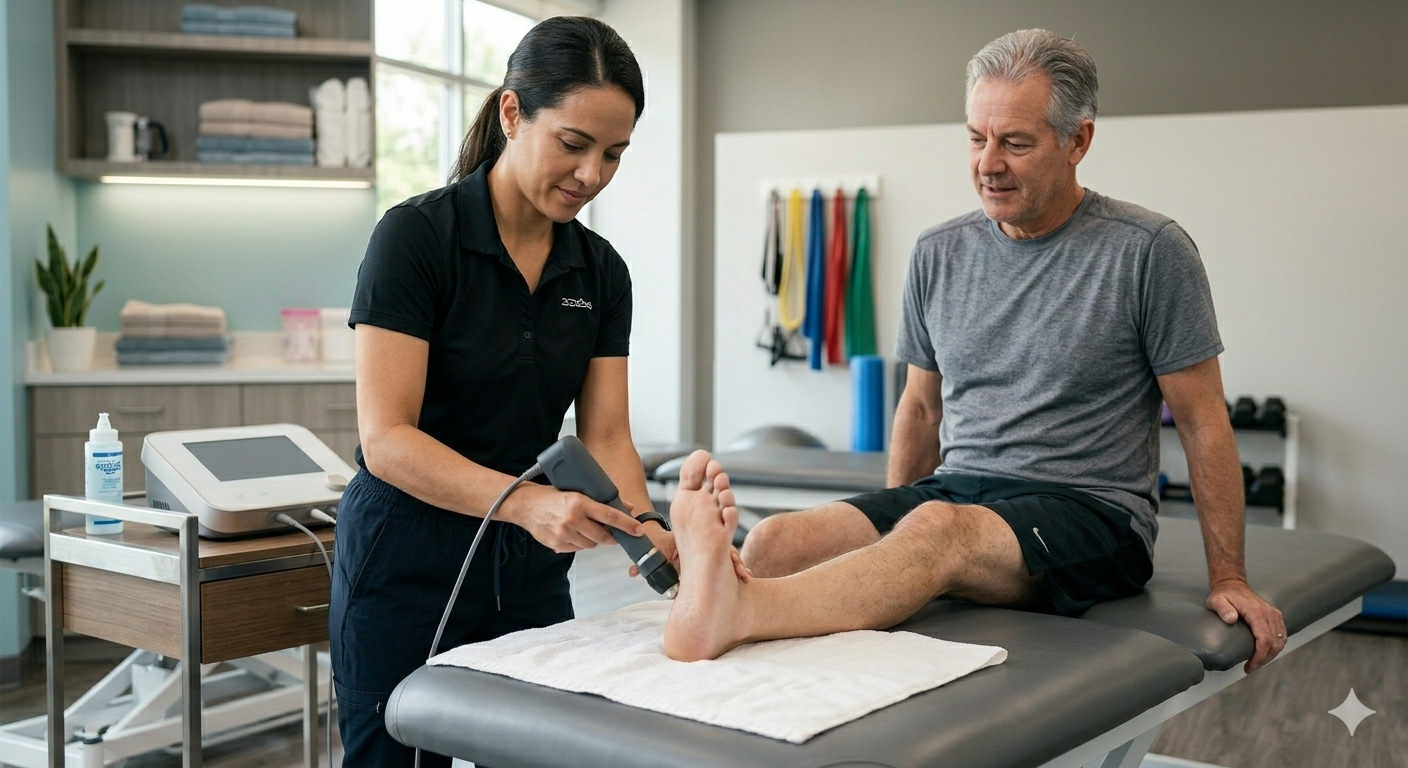
Shockwave therapy, also called extracorporeal shockwave therapy (ESWT), uses acoustic pressure waves to stimulate healing in chronically damaged tissue. These are not electrical shocks. They are controlled sound waves delivered through a handheld applicator pressed against your skin over the affected area.
The acoustic waves increase blood circulation, stimulate the formation of new blood vessels, break down calcifications and scar tissue, and activate stem cells that promote tissue repair. The treatment essentially restarts the healing process in tissue that has been stuck in a chronic, non-healing state.
Each session takes about 5 to 10 minutes per treatment area. Most patients describe the sensation as a rapid tapping or pulsing that is mildly uncomfortable during the treatment but not painful. There is no anesthesia, no downtime, and you can return to normal activities immediately after your session.
Conditions That Respond Well to Shockwave Therapy
Shockwave therapy is particularly effective for chronic tendon conditions and calcified tissue. The most common conditions we treat with shockwave include:
Plantar fasciitis. This is one of the most well-researched applications of shockwave therapy. Patients with heel pain lasting more than 3 months who have not responded to stretching, orthotics, or cortisone injections often see significant improvement with shockwave.
Achilles tendinitis. Chronic Achilles tendon pain that has persisted despite rest and physical therapy responds well to shockwave. The treatment stimulates new blood vessel formation and collagen remodeling in the damaged tendon.
Calcific shoulder tendinitis. Calcium deposits in the rotator cuff tendons cause persistent shoulder pain and stiffness. Shockwave therapy breaks down these deposits and promotes their absorption by the body.
Patellar tendinitis (jumper's knee). A common overuse injury in athletes who run, jump, or squat frequently. Shockwave therapy accelerates healing when the tendon has not responded to rest and exercise alone.
Lateral epicondylitis (tennis elbow). Chronic elbow pain from repetitive gripping and wrist extension responds well to shockwave when conservative treatments have plateaued.
Shin splints (medial tibial stress syndrome). Runners and athletes with chronic shin pain that keeps coming back despite rest and training modifications can benefit from shockwave therapy.
How We Use Dry Needling and Shockwave Therapy Together
At NJ Rehab Experts, we often combine dry needling and shockwave therapy within the same treatment session or across the same treatment plan. These two modalities complement each other because they target different aspects of the same problem.
Dry needling addresses the muscular component by releasing trigger points, reducing muscle tension, and restoring normal muscle activation patterns. Shockwave therapy addresses the tendon and tissue component by stimulating healing, breaking down scar tissue, and improving circulation to damaged areas.
For example, a patient with plantar fasciitis often has trigger points in the calf and intrinsic foot muscles that are contributing to the tension pulling on the plantar fascia. Dry needling the calf releases that muscular tension, while shockwave therapy applied to the plantar fascia stimulates healing in the damaged tissue itself. Treating both components at the same time delivers faster and more complete results than either treatment alone.
This combined approach is also effective for chronic Achilles tendinitis with tight calf muscles, shoulder impingement with rotator cuff trigger points, and tennis elbow with forearm muscle tightness.
What to Expect During Your Treatment
Both dry needling and shockwave therapy are performed by your physical therapist during a regular therapy session. They are not standalone treatments. They are integrated into your overall rehabilitation plan alongside manual therapy, exercise, and other techniques.
During a Dry Needling Session
Your therapist will palpate the muscles in the target area to identify active trigger points. Once located, the needle is inserted through the skin into the trigger point. You may feel a brief twitch response followed by a release of tension. The needle stays in for a few seconds to a minute depending on the technique. Your therapist may treat multiple trigger points in a single session.
After treatment, you may feel some localized soreness similar to a deep tissue massage. This soreness typically resolves within 24 to 48 hours. Applying heat and staying hydrated helps. Most patients notice improved range of motion and reduced pain immediately or within a day of treatment.
During a Shockwave Session
Your therapist applies a small amount of gel to the skin and positions the shockwave applicator over the treatment area. The device delivers a series of acoustic pulses while your therapist adjusts the intensity and location based on your feedback. Each area takes about 5 to 10 minutes to treat.
You can return to normal activities right after the session. We typically recommend avoiding high-impact activity on the treated area for 24 to 48 hours to allow the healing response to begin. Most patients need 3 to 6 shockwave sessions spaced one week apart for optimal results.
Are Dry Needling and Shockwave Therapy Safe?
Both treatments have excellent safety profiles when performed by trained professionals.
Dry needling side effects are minimal. The most common is temporary soreness at the needle site, similar to post-exercise muscle soreness. Slight bruising can occur but is uncommon. Serious complications are extremely rare when the treatment is performed by a licensed physical therapist with proper training.
Shockwave therapy side effects are also mild. Some patients experience temporary redness or mild swelling at the treatment site. There is no risk of infection, no needles involved, and no medication administered.
Both treatments are not recommended for patients who are pregnant, have active infections at the treatment site, or are on blood thinning medications (for dry needling specifically). Your therapist will review your medical history before recommending either treatment.
Dry Needling and Shockwave Therapy Across New Jersey
NJ Rehab Experts offers both dry needling and shockwave therapy at all four of our locations in Jersey City, Clifton, Secaucus, and West Windsor. Both treatments are performed by your licensed physical therapist as part of your personalized treatment plan.
Our Jersey City clinic serves patients from Hoboken and Bayonne. Our Clifton location is convenient for patients from Passaic, Paterson, and Wayne. And our West Windsor clinic treats patients from East Brunswick and Princeton.
These advanced treatments are available as part of our orthopedic physical therapy, sports physical therapy, injury rehabilitation, and post-accident care programs. We also use dry needling as part of our posture correction and neuropathy rehabilitation programs when indicated.
Visit our locations page to find the clinic closest to you.
Ready to Try a Different Approach to Pain Relief?
If you have been dealing with chronic muscle pain, tendon problems, or trigger points that are not improving with stretching and exercise alone, dry needling and shockwave therapy may be exactly what you need.
Call NJ Rehab Experts today at (212) 227-3233 or book your appointment online.
Same-week appointments are available at most locations. Our staff can verify your insurance benefits before your first visit through our insurance verification page.
Over 400 five-star reviews. Over 15 years of experience. Advanced treatments that deliver real results. Let our team help you move past the pain.
