Post-Surgical Rehab in NJ | NJ Rehab Experts PT
Post-Surgical Rehab: Why Physical Therapy After Surgery Makes All the Difference
Surgery is only half the battle. Whether you just had a knee replacement, shoulder repair, ACL reconstruction, or spinal procedure, the work you put into post-surgical rehab determines how well you actually recover. Without proper physical therapy after surgery, you risk losing range of motion permanently, developing scar tissue that restricts movement, building compensatory habits that lead to new problems, and taking far longer to get back to your normal life.
At NJ Rehab Experts, we specialize in post-surgical rehabilitation at all four of our New Jersey locations. We work closely with your surgeon's protocols and build a recovery plan that moves at the right pace for your body, pushing hard enough to make real progress without putting your surgical repair at risk.
Why Physical Therapy After Surgery Is Not Optional
Some patients assume that once the surgery is done, the body will heal on its own. It will heal, but not well. Surgical healing without guided rehabilitation almost always results in stiffness, weakness, and reduced function compared to patients who complete a proper physical therapy program.
Here is why post-surgical rehab matters so much:
Scar tissue forms quickly and aggressively. After any surgical procedure, your body lays down scar tissue as part of the healing process. Without early, controlled movement, that scar tissue becomes thick and restrictive, limiting your range of motion. Once scar tissue fully matures, it becomes much harder to break down.
Muscles weaken rapidly after surgery. Research shows that muscle strength can decrease by up to 20 percent within the first week of immobilization after surgery. The longer you wait to start strengthening, the deeper the deficit becomes and the longer recovery takes.
Your brain changes how it controls movement. Pain and swelling after surgery cause your nervous system to alter the way it activates muscles around the surgical site. Without targeted neuromuscular retraining, these altered patterns persist and can lead to ongoing dysfunction.
Your surgeon's repair needs to be protected. Post-surgical protocols exist for a reason. A skilled physical therapist understands the healing timeline for your specific procedure and knows exactly how much load, range of motion, and activity is safe at each stage.
Common Surgeries We Rehabilitate
At NJ Rehab Experts, we treat patients recovering from a wide range of surgical procedures. Here are the most common ones we see.
Knee Replacement (Total and Partial)
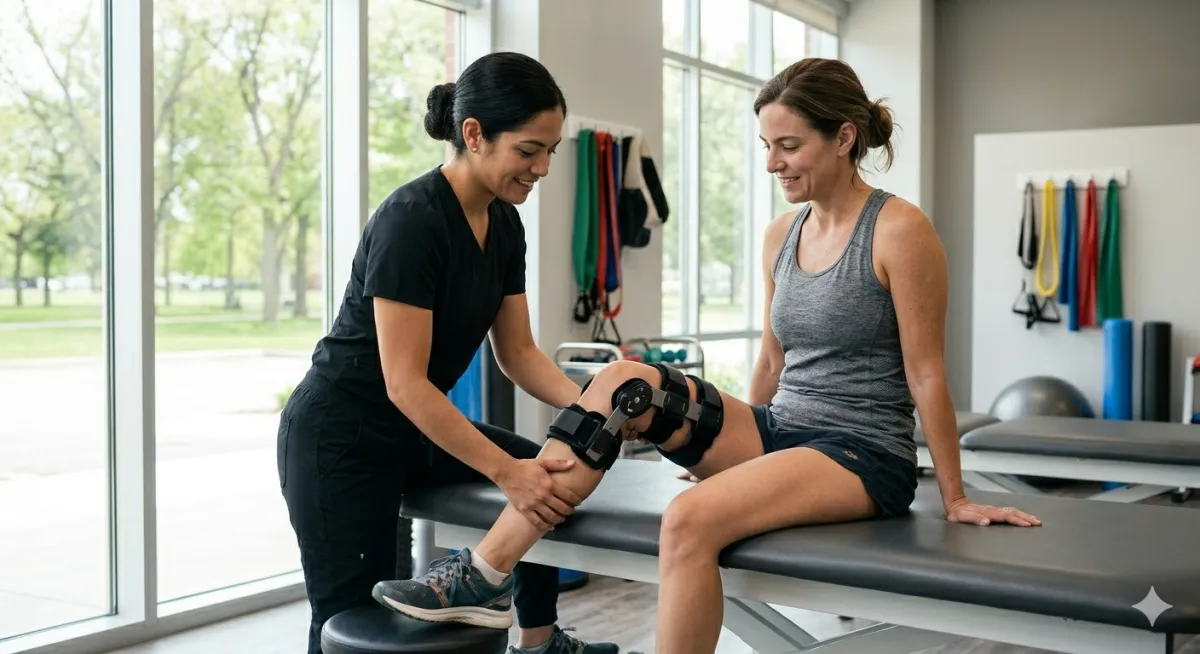
Knee replacement recovery is one of our most frequent post-surgical programs. The first few weeks focus on reducing swelling, restoring knee flexion and extension range of motion, and activating the quadriceps. As healing progresses, we advance to progressive strengthening, balance training, stair negotiation, and functional activities.
Most knee replacement patients attend physical therapy two to three times per week for 8 to 12 weeks. Patients who are consistent with their program and home exercises typically regain full functional mobility and return to activities like walking, gardening, golf, and light sports.
Hip Replacement
Hip replacement rehab focuses on restoring hip range of motion while respecting surgical precautions (movement restrictions your surgeon puts in place to protect the new joint). We work on gait retraining, hip and core strengthening, balance, and progressively returning to activities like stair climbing, driving, and exercising.
Recovery timelines are similar to knee replacement, with most patients seeing significant improvement within the first 6 to 8 weeks.
ACL Reconstruction
ACL surgery rehab is one of the longest and most detailed rehabilitation programs in physical therapy. The full return-to-sport process typically takes 9 to 12 months and progresses through distinct phases: early healing and range of motion, progressive strengthening, functional training, agility and plyometrics, and sport-specific conditioning.
Our sports physical therapy team has extensive experience with ACL rehab and uses objective testing at each milestone to make sure your knee is truly ready before advancing to the next phase.
Rotator Cuff Repair
Shoulder surgery recovery requires patience and precision. The repaired tendon needs time to heal before you can start active strengthening. Early rehab focuses on gentle passive range of motion (your therapist moves your arm for you) and gradually transitions to active movement and strengthening over 12 to 16 weeks.
We use a combination of manual therapy, targeted rotator cuff and scapular strengthening, and functional training to get you back to reaching, lifting, and using your arm normally.
Spinal Surgery (Laminectomy, Discectomy, Fusion)
Spinal surgery rehab varies significantly depending on the procedure. A simple discectomy may only require 4 to 6 weeks of therapy, while a multi-level fusion may need 3 to 6 months of careful rehabilitation. Our therapists are trained in the McKenzie Method and spinal stabilization protocols that are specifically designed for post-surgical spine patients.
Core strengthening, posture retraining, and body mechanics education are central to every spinal rehab program. The goal is not just pain relief but long-term spinal health and injury prevention.
Ankle and Foot Surgery
Ankle ligament repairs, Achilles tendon repairs, and bunion corrections all require structured rehabilitation to restore mobility, strength, and normal walking patterns. We focus on early range of motion, progressive weight bearing, balance training, and gait retraining to get you walking confidently again.
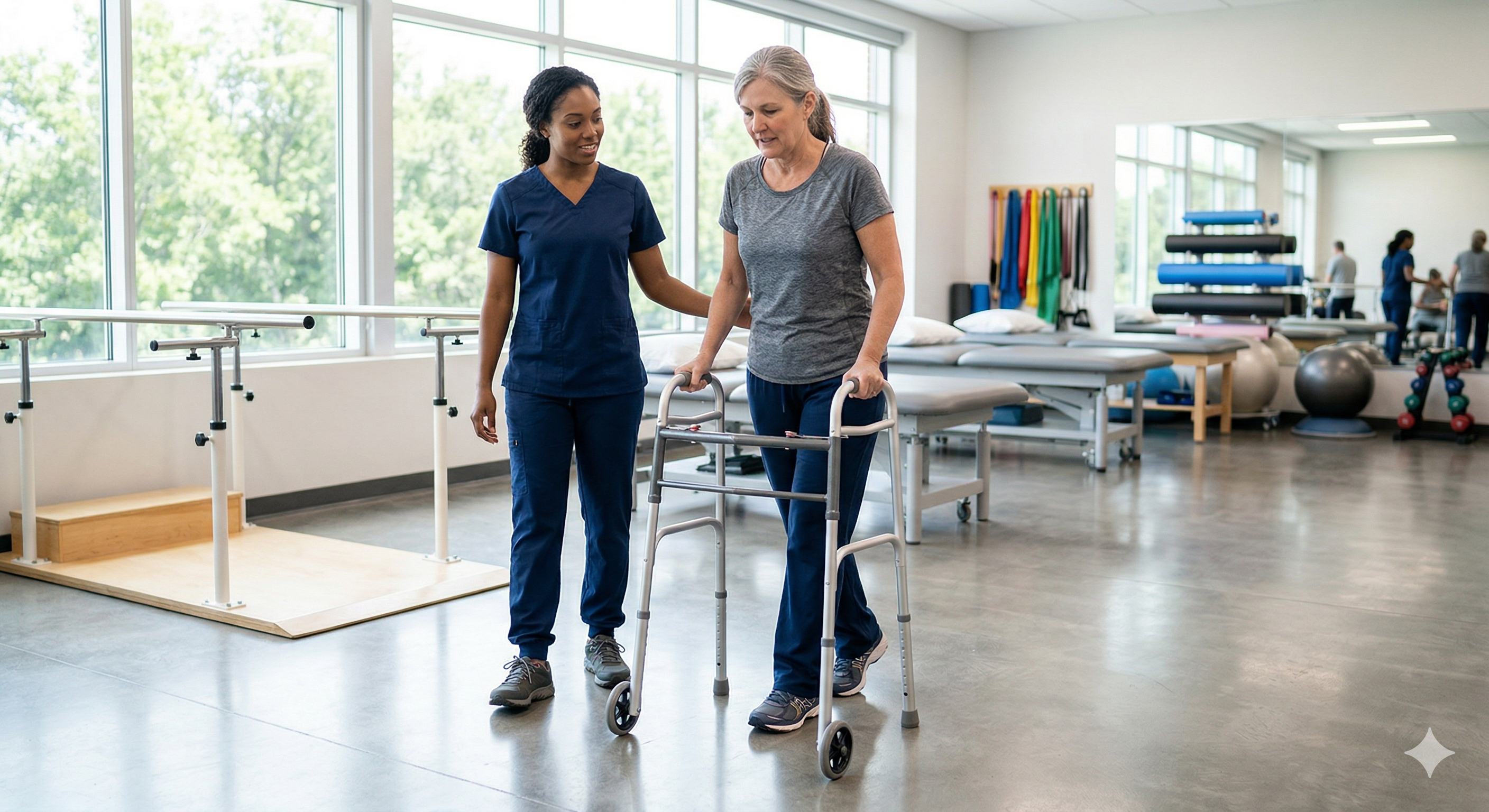
What Post-Surgical Rehab Looks Like at NJ Rehab Experts
Your First Post-Surgical Visit
Your first visit typically occurs within 1 to 2 weeks after surgery, depending on your surgeon's recommendation. Your therapist will review your surgical report and protocol, assess your current range of motion and swelling, evaluate your pain levels and movement patterns, and establish baseline measurements using our Fit3D body scanning system when appropriate.
By the end of your first visit, you will have a clear treatment plan with specific goals for each phase of recovery.
Your Treatment Plan
Every post-surgical program at NJ Rehab Experts includes:
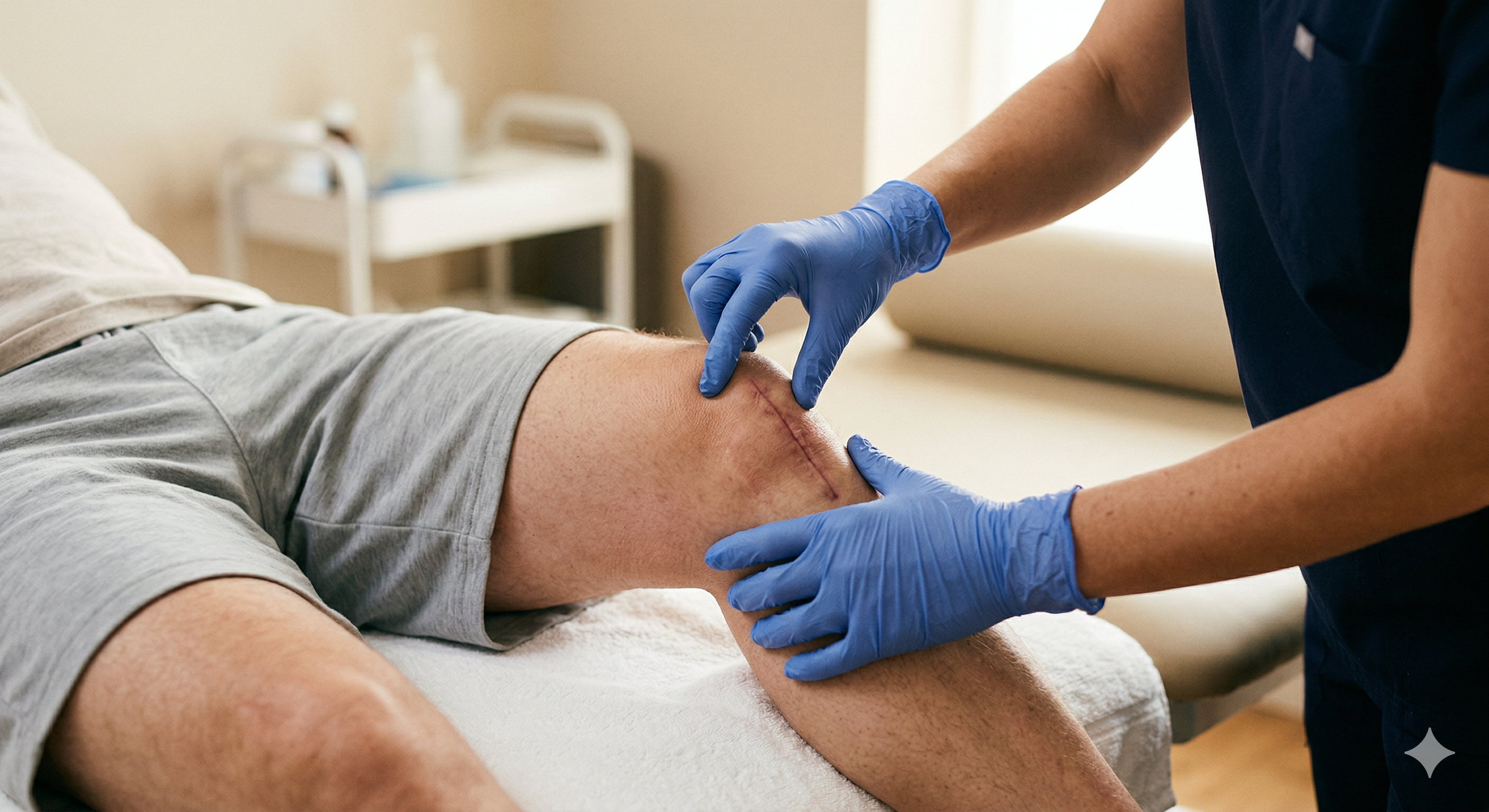
Manual therapy. Hands-on techniques to manage scar tissue, restore joint mobility, and reduce swelling. Our therapists use joint mobilization, soft tissue release, and scar mobilization techniques throughout your recovery.
Progressive strengthening. Starting with gentle activation exercises and advancing to functional strengthening as your healing permits. We follow your surgeon's weight-bearing and activity restrictions precisely.
Range of motion restoration. A structured progression from passive to active-assisted to full active range of motion, ensuring you regain flexibility without stressing the surgical repair.
Balance and proprioception training. Surgery disrupts the proprioceptive feedback in the affected joint. We retrain your balance system to restore stability and confidence.
Functional training. Practicing real-life activities like walking, stair climbing, getting in and out of a car, returning to work tasks, and eventually exercise and sports.
Home exercise program. Every patient gets a home program from day one. The exercises you do between visits are just as important as what happens in the clinic.
Advanced Treatments for Post-Surgical Recovery
For patients who need additional pain management or accelerated healing, we offer:
NeuroMed Electroanalgesia. Our FDA-cleared system provides targeted pain relief that helps patients participate more fully in their rehabilitation exercises, especially in the early weeks when post-surgical pain is highest.
Dry needling. For patients who develop muscle guarding, trigger points, or compensatory tightness around the surgical site, dry needling provides fast relief and restores normal muscle function.
Shockwave therapy. For chronic tendon issues that develop after surgery or for scar tissue that is limiting progress, shockwave therapy can restart the healing process.
How Soon Should You Start Physical Therapy After Surgery?
The answer depends on your specific procedure, but in general, the sooner the better.
For most orthopedic surgeries, physical therapy begins within 1 to 2 weeks after the procedure. Some surgeons want patients to start gentle range of motion exercises within 24 to 48 hours, especially after knee and hip replacements.
For more complex procedures like spinal fusions or extensive tendon repairs, your surgeon may recommend waiting 4 to 6 weeks before starting therapy. Even in these cases, your therapist can provide guidance on safe positioning, gentle movement, and pain management strategies during the waiting period.
The key is to have your physical therapy appointment scheduled before your surgery date. That way, you are ready to start the moment your surgeon gives the green light, with no delay.
Working with Your Surgeon
At NJ Rehab Experts, we maintain close communication with your surgical team throughout your recovery. Your surgeon provides us with the surgical protocol, which outlines specific timelines for range of motion, weight bearing, and activity progression. We follow this protocol precisely while using our clinical judgment to advance or modify the program based on how your body is responding.
If we have questions about your progress or want to advance beyond the standard protocol, we communicate directly with your surgeon's office. This collaborative approach ensures you get the best possible outcome.
We also provide regular progress reports that can be shared with your surgeon at your follow-up appointments.
Post-Surgical Rehabilitation Across New Jersey
NJ Rehab Experts provides injury rehabilitation and post-surgical physical therapy at all four of our locations in Jersey City, Clifton, Secaucus, and West Windsor.
Our Jersey City clinic serves patients from Hoboken and Bayonne. Our Clifton location is convenient for patients from Passaic, Paterson, and Wayne. And our West Windsor clinic treats patients from East Brunswick and Princeton.
We also treat related conditions including post-accident injuries, workers' compensation cases, balance and vestibular problems, and neuropathy.
Visit our locations page or learn more about our team.
Schedule Your Post-Surgical Rehab Before Your Surgery
Do not wait until after your procedure to find a physical therapist. The best outcomes happen when rehab is planned in advance and started on time.
Call NJ Rehab Experts today at (973) 954-5113 or book your appointment online.
Same-week appointments are available at most locations. Our staff can verify your insurance benefits before your first visit through our insurance verification page.
Over 400 five-star reviews. Over 15 years of experience. Four locations across New Jersey. Let us help you recover stronger.
