Rotator Cuff Rehab in NJ | Shoulder Pain Treatment
Rotator Cuff Rehab: How Physical Therapy Fixes Shoulder Pain and Gets You Moving Again
Your shoulder does more work than almost any other joint in your body. Every time you reach overhead, throw a ball, lift a bag of groceries, or push open a heavy door, your rotator cuff is working to keep that movement smooth and controlled. So when something goes wrong with your rotator cuff, you feel it in everything you do. Rotator cuff rehab through physical therapy is the most effective way to restore your shoulder function, whether you are dealing with a tear, tendinitis, impingement, or post-surgical recovery.
At NJ Rehab Experts, shoulder injuries are one of the top reasons patients come to see us. Our therapists have over 15 years of experience treating rotator cuff conditions using a combination of hands-on manual therapy, progressive strengthening, and advanced treatments like dry needling and shockwave therapy. Whether your shoulder pain started from an injury, developed gradually over time, or followed surgery, we build a plan that gets you back to using your arm with confidence.
Understanding Your Rotator Cuff
The rotator cuff is a group of four muscles and their tendons that surround the shoulder joint. These muscles, the supraspinatus, infraspinatus, teres minor, and subscapularis, work together to stabilize the head of the upper arm bone inside the shallow shoulder socket. They also control the rotation and lifting movements of your arm.
Because the shoulder sacrifices stability for mobility (it is the most mobile joint in the body), the rotator cuff is under constant stress. This makes it vulnerable to injury, especially with repetitive overhead movements, heavy lifting, or the natural wear that comes with aging.
Common Rotator Cuff and Shoulder Conditions
Rotator Cuff Tears
Rotator cuff tears can be partial (the tendon is damaged but not completely severed) or full-thickness (the tendon is torn all the way through). Tears can happen suddenly from a fall, a lifting injury, or a traumatic impact. They can also develop gradually from repetitive overhead use or age-related degeneration.
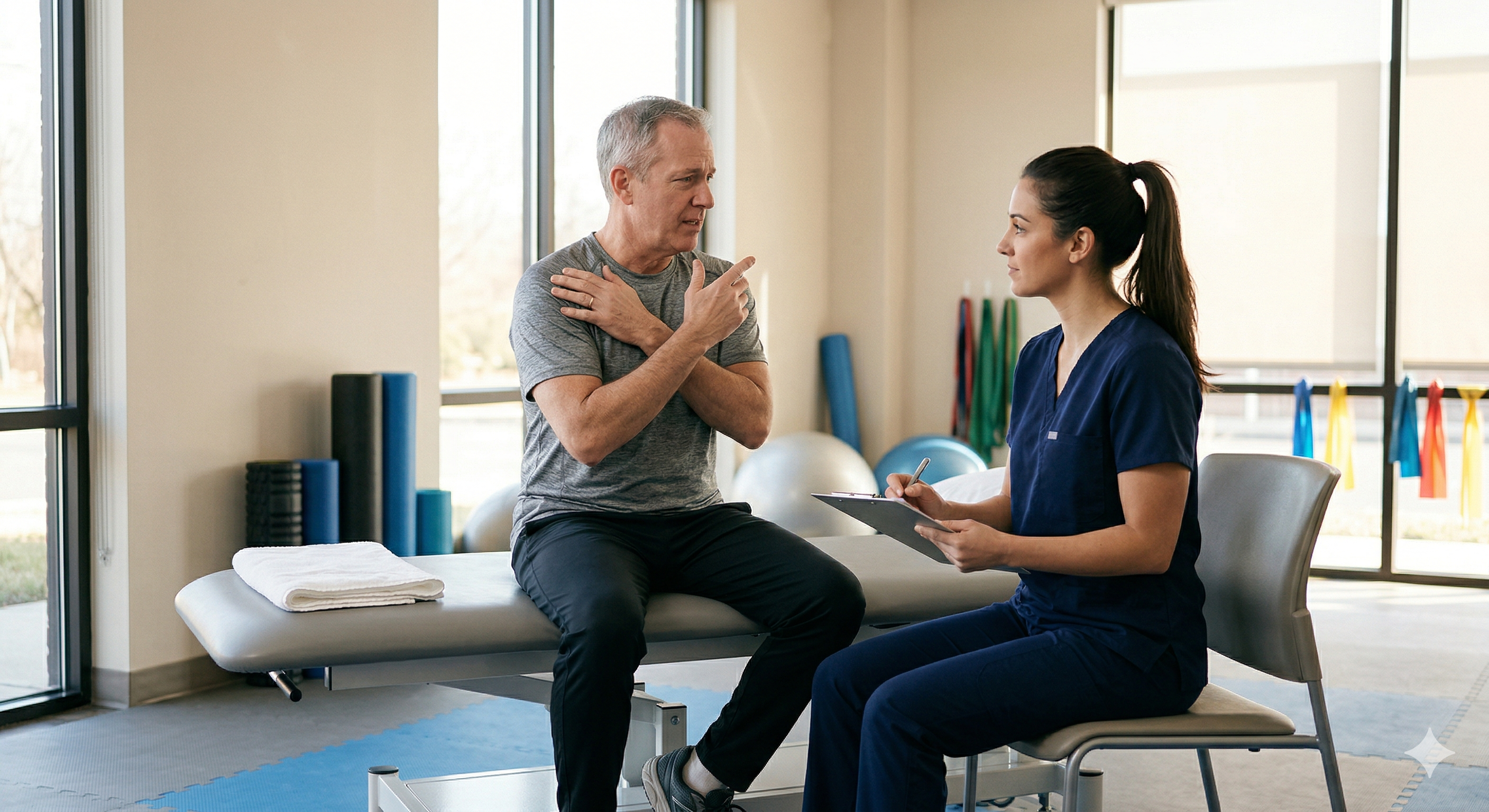
Symptoms typically include pain on the outside of the shoulder that worsens with reaching or lifting, weakness when rotating the arm or raising it overhead, pain that disrupts sleep (especially when lying on the affected side), and a catching or clicking sensation during movement.
Many partial tears and some full-thickness tears respond well to physical therapy without surgery. Your therapist will assess the severity of your tear and work with your physician to determine the best treatment approach.
Rotator Cuff Tendinitis and Tendinopathy
Tendinitis is inflammation of the rotator cuff tendons, usually from overuse. Tendinopathy is a broader term that includes chronic tendon degeneration. Both cause shoulder pain with overhead activities and are extremely common in swimmers, baseball and softball players, tennis players, CrossFit participants, and anyone who does repetitive overhead work.
Physical therapy for rotator cuff tendinitis focuses on reducing inflammation, restoring pain-free range of motion, and progressively strengthening the rotator cuff and scapular muscles to prevent recurrence.
Shoulder Impingement
Shoulder impingement occurs when the rotator cuff tendons get pinched between the bones of the shoulder during overhead movements. This causes pain at the front or side of the shoulder, especially when reaching overhead, reaching behind your back, or lifting your arm to the side.
Impingement is often caused by poor scapular mechanics, rotator cuff weakness, or tightness in the posterior shoulder capsule. Physical therapy addresses all three of these contributing factors.
Frozen Shoulder (Adhesive Capsulitis)
Frozen shoulder is a condition where the shoulder capsule becomes thick, tight, and inflamed, severely restricting range of motion. It typically progresses through three stages: the freezing stage (increasing pain and stiffness), the frozen stage (less pain but significant stiffness), and the thawing stage (gradual return of motion).
Frozen shoulder treatment through physical therapy focuses on gentle stretching and mobilization to restore range of motion, pain management, and strengthening as mobility returns. The process requires patience, as full recovery can take 6 to 18 months, but consistent physical therapy significantly shortens that timeline.
Post-Surgical Shoulder Rehabilitation
If you have had rotator cuff repair surgery, labral repair, shoulder replacement, or any other shoulder procedure, physical therapy is essential for a successful recovery. Post-surgical shoulder rehab follows a carefully staged protocol that your surgeon provides, progressing from passive range of motion to active movement to strengthening over 12 to 16 weeks or longer depending on the procedure.
How Physical Therapy Treats Rotator Cuff and Shoulder Problems
Manual Therapy
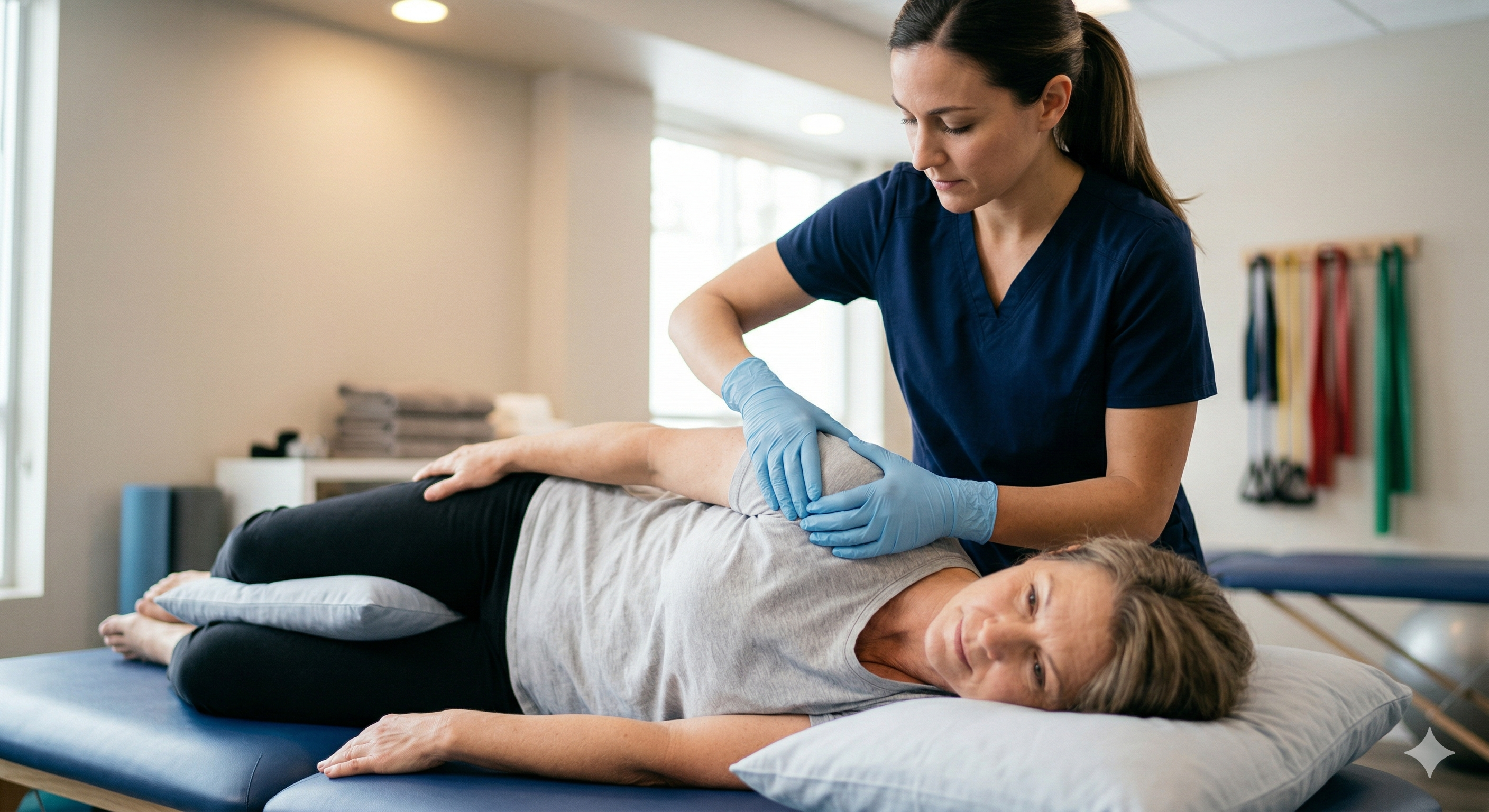
Your therapist uses hands-on techniques to restore normal joint mechanics, reduce muscle guarding, and improve range of motion. This includes glenohumeral joint mobilization, scapulothoracic mobilization, soft tissue release of the rotator cuff and surrounding muscles, and cervical spine assessment (because neck problems can refer pain to the shoulder). Our therapists are trained in both McKenzie and Mulligan manual therapy techniques.
Rotator Cuff and Scapular Strengthening
Strengthening is the foundation of rotator cuff rehab. But it is not just about making the shoulder stronger. It is about restoring the correct balance and timing of muscle activation around the shoulder blade and shoulder joint.
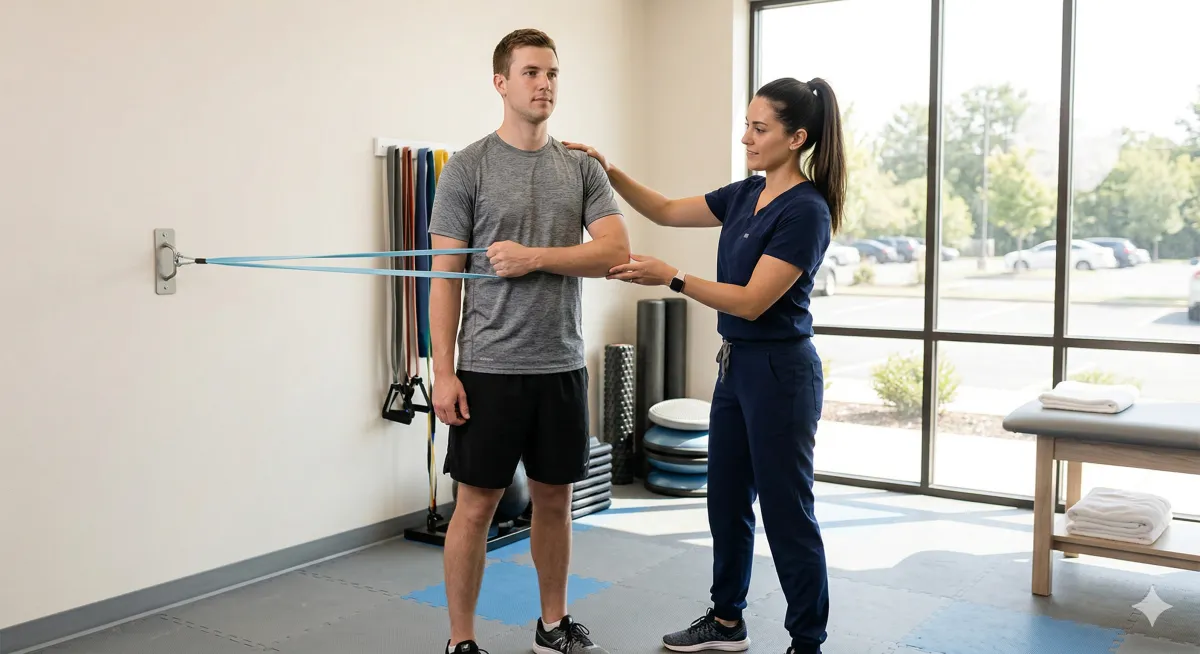
Your program will progress through stages: isometric holds (muscle activation without movement), isotonic exercises with resistance bands and light weights, functional movements that mimic real-life activities, and sport-specific or work-specific loading if applicable.
Scapular stabilization is equally important. The shoulder blade must move correctly to create space for the rotator cuff tendons. If the scapular muscles are weak or poorly coordinated, the rotator cuff gets pinched regardless of how strong it is.
Dry Needling
For patients with trigger points in the rotator cuff muscles, upper trapezius, levator scapulae, or rhomboids, dry needling provides fast relief from muscle tension and referred pain patterns. Many shoulder patients develop compensatory tightness in the neck and upper back, and dry needling addresses these areas effectively.
Shockwave Therapy
For chronic rotator cuff tendinopathy, calcific tendinitis, and shoulder conditions that have not responded to traditional therapy, shockwave therapy stimulates healing by increasing blood flow, breaking down calcifications, and promoting tissue remodeling. It is a fast, in-office treatment that typically requires 3 to 6 sessions.
NeuroMed Electroanalgesia
For patients with significant shoulder pain, especially after surgery or in the acute phase of a rotator cuff tear, our FDA-cleared NeuroMed Electroanalgesia system provides targeted pain relief that allows you to participate more fully in your rehabilitation exercises.
What to Expect During Recovery
Recovery timelines depend on the condition and its severity.
For rotator cuff tendinitis and impingement, most patients see significant improvement within 4 to 8 weeks of consistent physical therapy. Pain typically decreases within the first 2 to 3 weeks, and strength gains build progressively.
For partial rotator cuff tears treated conservatively, recovery usually takes 8 to 12 weeks. The focus is on reducing pain, restoring range of motion, and building enough rotator cuff and scapular strength to compensate for the damaged tissue.
For post-surgical rotator cuff repair, the full rehabilitation process takes 4 to 6 months. The first 6 weeks focus on protecting the repair with passive range of motion only. Active movement begins around week 6 to 8, and strengthening typically starts at week 10 to 12. Return to full activity and sports usually occurs around 5 to 6 months.
For frozen shoulder, the timeline is longer and more variable. Consistent physical therapy can reduce the total recovery time from 18 months or more to 6 to 12 months in many cases.
Your therapist will give you a home exercise program from your first visit. The exercises you do between sessions are critical to your progress. We keep programs manageable so they actually get done.
When Shoulder Pain Needs More Than Physical Therapy
Physical therapy resolves the majority of rotator cuff and shoulder conditions. However, some situations benefit from additional medical intervention.
If your shoulder pain is accompanied by sudden weakness that prevents you from raising your arm, significant night pain that is not improving after 2 to 3 weeks of therapy, or symptoms that worsen despite consistent treatment, your therapist may recommend an updated MRI and a referral to an orthopedic surgeon for further evaluation.
For patients with large or complete rotator cuff tears, especially in younger or highly active patients, surgery followed by physical therapy often provides the best long-term outcome. We work closely with orthopedic surgeons across New Jersey and can help coordinate your care.
Shoulder Pain Treatment Across New Jersey
NJ Rehab Experts provides orthopedic physical therapy for rotator cuff and shoulder conditions at all four of our locations in Jersey City, Clifton, Secaucus, and West Windsor.
Our Jersey City clinic treats patients from Hoboken and Bayonne. Our Clifton location serves patients from Passaic, Paterson, and Wayne. And our West Windsor clinic is convenient for residents of East Brunswick and Princeton.
We also treat related conditions including sports injuries, post-accident injuries, posture-related pain, workers' compensation injuries, and post-surgical rehabilitation.
Visit our locations page or meet our team.
Stop Letting Shoulder Pain Limit Your Life
Shoulder pain does not improve by ignoring it. The longer you wait, the stiffer and weaker the shoulder becomes, and the harder recovery gets. Physical therapy can identify the cause, relieve your pain, and rebuild your shoulder to handle everything you need it to do.
Call NJ Rehab Experts today at (973) 954-5113 or book your appointment online.
Same-week appointments are available at most locations. Our staff can verify your insurance benefits before your first visit through our insurance verification page.
Over 400 five-star reviews. Over 15 years of experience. Four locations across New Jersey. Let us help you move without pain.
