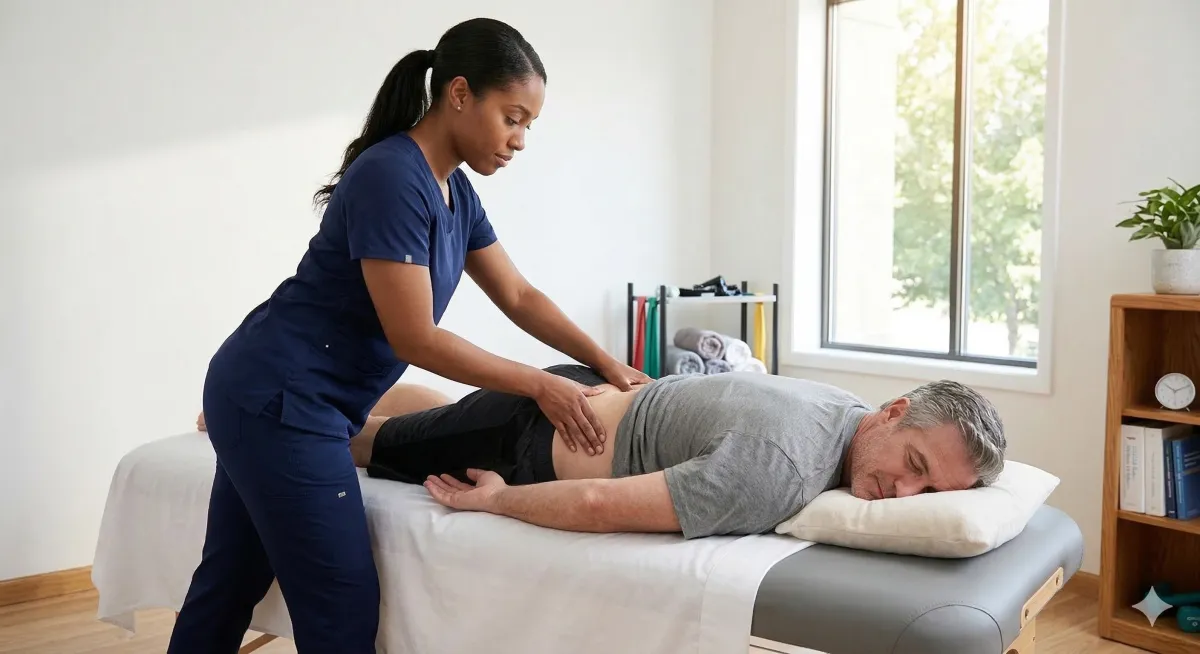
Sciatica Treatment in NJ | Physical Therapy That Works
Sciatica Treatment That Actually Works: A Physical Therapist's Guide
If you have ever felt a sharp, burning pain shoot from your lower back down through your hip and leg, you already know how miserable sciatica can be. It can make sitting painful, standing uncomfortable, and sleeping nearly impossible. And when the pain is bad enough, it starts affecting everything, your work, your mood, your ability to just get through the day.
The good news is that sciatica treatment through physical therapy is one of the most effective ways to get lasting relief without surgery or long-term medication. At NJ Rehab Experts, we treat sciatica and low back pain every single day across our four New Jersey clinics, and the majority of our patients see significant improvement within the first few weeks of care.
This guide will explain what sciatica actually is, what causes it, why physical therapy works so well for it, and what your treatment will look like at our clinic.
What Is Sciatica and What Causes It?
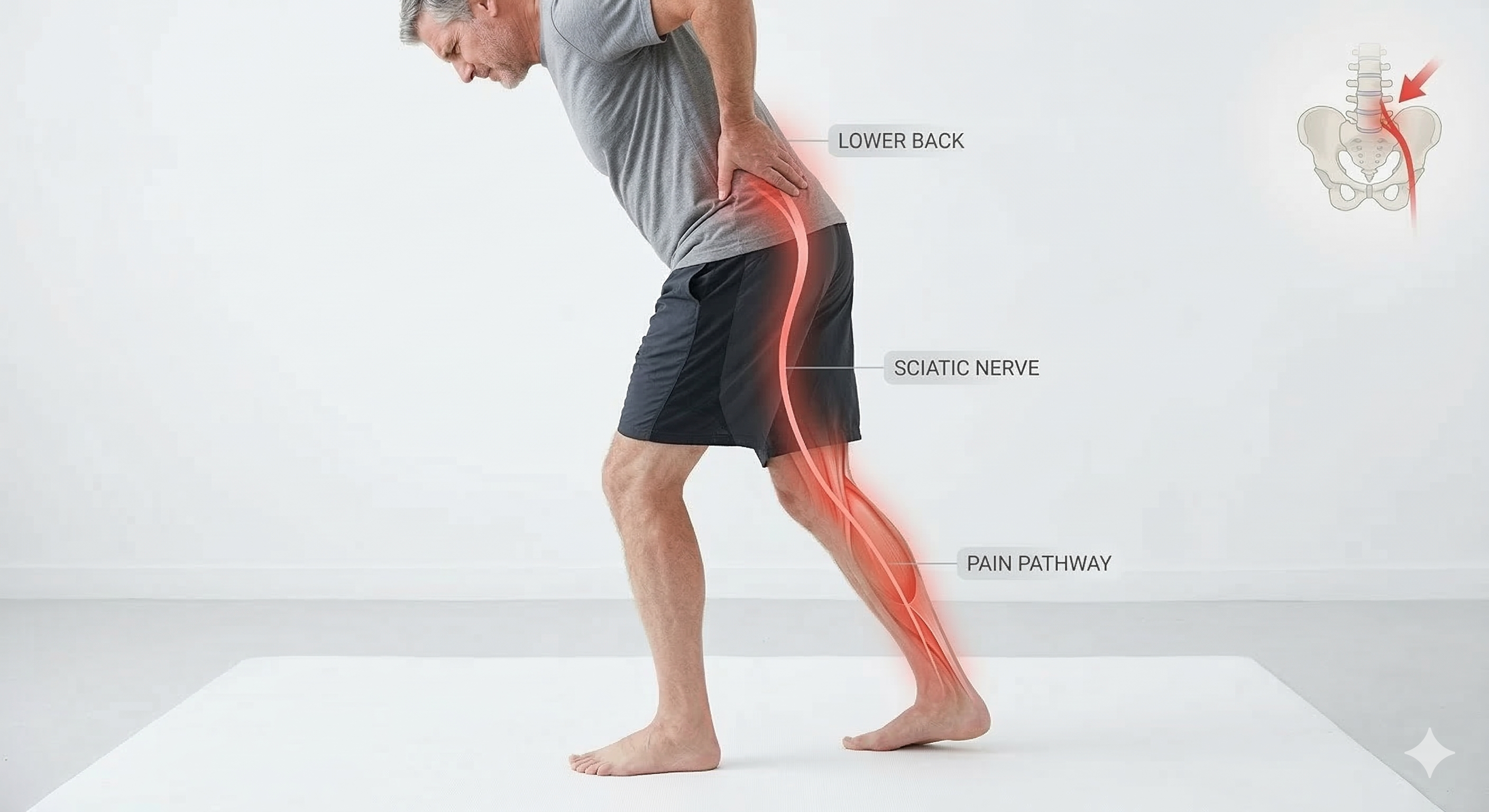
Sciatica is not a diagnosis on its own. It is a symptom. It refers to pain that travels along the path of the sciatic nerve, which runs from your lower back through your hips and buttocks and down the back of each leg. When something compresses, irritates, or inflames that nerve, you feel pain along part or all of that path.
The most common causes of sciatica include:
Herniated or bulging disc. This is the most frequent cause. When one of the soft discs between your spinal vertebrae pushes out of position, it can press directly on the sciatic nerve root.
Spinal stenosis. A narrowing of the spinal canal that puts pressure on the nerves as they exit the spine. This is more common in patients over 60.
Degenerative disc disease. As discs wear down with age, they lose height and cushioning, which can lead to nerve irritation.
Piriformis syndrome. The piriformis muscle in your buttock can tighten or spasm and compress the sciatic nerve where it passes underneath.
Spondylolisthesis. When one vertebra slips forward over the one below it, it can pinch the nerve.
Understanding what is causing your sciatica matters because it changes the treatment approach. A herniated disc responds differently than piriformis syndrome, and a good physical therapist will figure out the root cause before building your plan.
Why Physical Therapy Is the Best First Step for Sciatica
You might be tempted to rest until the pain goes away, take muscle relaxers, or jump straight to asking about surgery. But research consistently shows that back pain physical therapy is the most effective first-line treatment for sciatica, and it should be tried before considering injections or surgical options.
Here is why physical therapy works so well for sciatic nerve pain:
It addresses the root cause, not just the symptoms. Pain medication masks the pain. Physical therapy identifies what is compressing the nerve and fixes the underlying problem through targeted exercises, manual therapy, and postural correction.
It reduces inflammation naturally. Specific movements and positions can take pressure off the irritated nerve, which reduces inflammation and allows the nerve to heal. Your therapist will teach you which positions help and which ones to avoid.
It prevents the problem from coming back. Sciatica has a high recurrence rate when the underlying weakness or imbalance is not corrected. Physical therapy strengthens the muscles that support your spine, improves your flexibility, and teaches you movement patterns that protect your back long term.
It helps you avoid surgery. Studies show that most patients with sciatica from a herniated disc improve with conservative treatment including physical therapy. Surgery is only needed for a small percentage of cases where there is progressive nerve damage or severe symptoms that do not respond to therapy.
What Sciatica Treatment Looks Like at NJ Rehab Experts
When you come to NJ Rehab Experts for sciatica treatment, your experience starts with a thorough evaluation that goes well beyond asking where it hurts.
Your Initial Evaluation
Your therapist will begin by talking with you about when the pain started, what makes it better or worse, whether the pain travels down your leg, and how it is affecting your daily life. We also ask about your work, your exercise habits, and your sleeping position, because these factors often play a direct role in your symptoms.
From there, your therapist performs a detailed hands-on assessment. This includes testing your range of motion in the spine and hips, evaluating your nerve function through reflex and sensation testing, checking muscle strength in your legs and core, and performing specific clinical tests that help identify whether the problem is a disc, a joint, or a muscle.
If appropriate, we will also use our Fit3D body scanning system to capture baseline posture and symmetry measurements. This gives us objective data to track your progress over the course of treatment.
Your Treatment Plan
Based on what we find, your therapist builds a personalized low back pain treatment plan that typically includes several of the following:
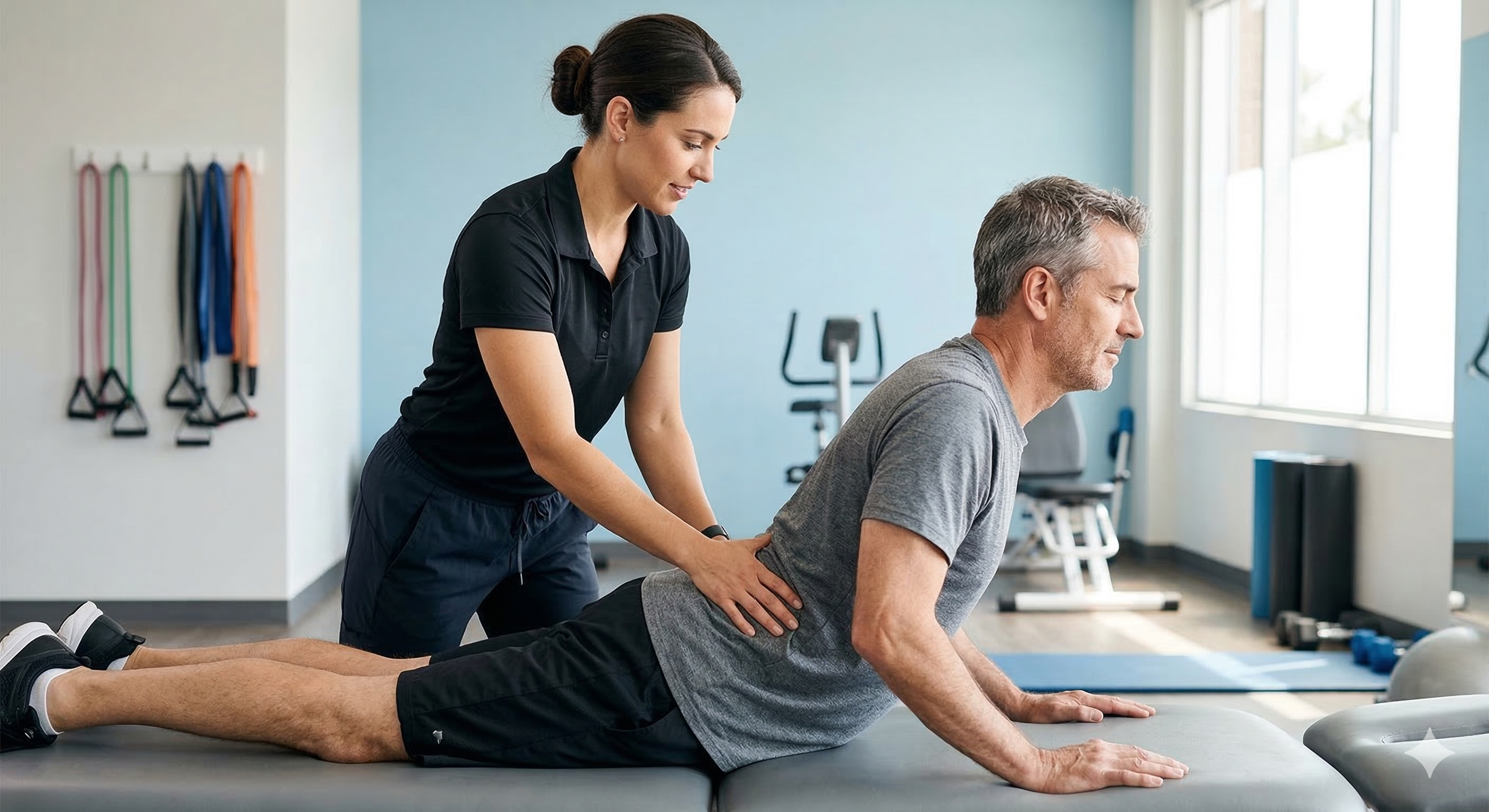
McKenzie Method exercises. Our therapists are trained in the McKenzie Method, which is one of the most researched and effective approaches for disc-related back pain and sciatica. McKenzie uses specific directional exercises to centralize your pain (move it out of your leg and back toward the spine), which is a strong sign that the nerve is decompressing.
Manual therapy and joint mobilization. Your therapist uses hands-on techniques to improve spinal mobility, reduce muscle guarding, and restore normal movement in the joints surrounding the affected area. We also use Mulligan mobilization techniques for patients with specific joint restrictions.
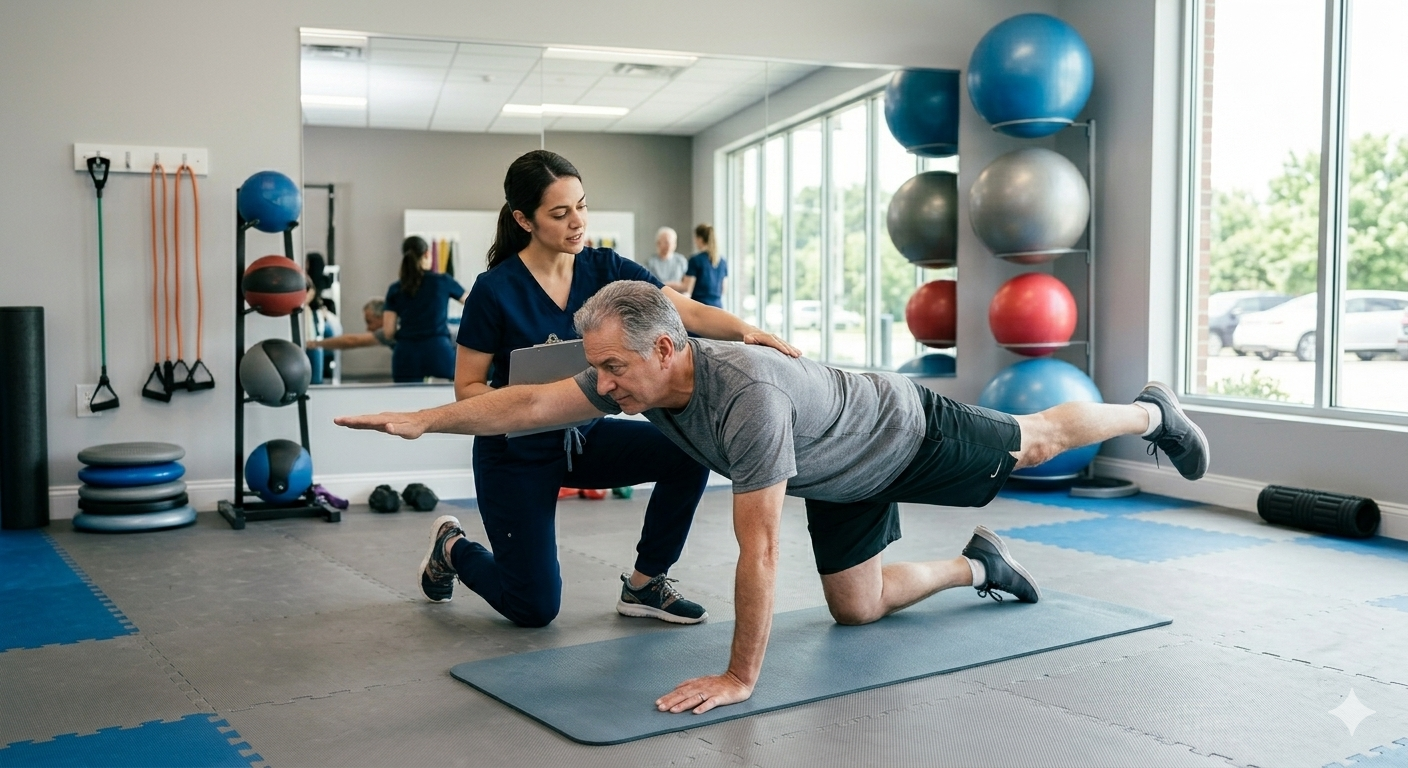
Core stabilization. A weak core is one of the biggest risk factors for recurrent low back pain. We progressively strengthen the deep stabilizing muscles of your spine, including the transverse abdominis, multifidus, and pelvic floor, so your back has the support it needs.
Nerve gliding exercises. When the sciatic nerve is irritated, it can become stuck or restricted in the surrounding tissue. Nerve gliding (also called neural mobilization) uses gentle, controlled movements to improve the nerve's ability to slide freely, which reduces tension and pain.
Dry needling for muscle tightness. For patients with significant piriformis tightness, gluteal trigger points, or lumbar muscle spasms, dry needling can provide rapid relief. Our therapists insert thin, sterile needles into the tight muscle to release the spasm and improve blood flow to the area.
Shockwave therapy for chronic cases. For patients with sciatica that has lasted months or longer, shockwave therapy can stimulate healing in chronically irritated tissue. It uses acoustic waves to increase circulation and break down adhesions around the affected area.
NeuroMed Electroanalgesia. For patients dealing with severe or persistent sciatic nerve pain, our FDA-cleared NeuroMed system delivers targeted electrical stimulation that goes beyond standard TENS. This treatment is especially helpful for patients who need pain relief to participate fully in their exercise program.
What to Expect During Recovery
Most patients with sciatica start feeling improvement within 2 to 4 weeks of consistent physical therapy. The first thing that typically improves is the pain traveling down your leg. As treatment progresses, the pain centralizes back toward your lower back and then gradually resolves.
We typically recommend two to three visits per week during the first phase of treatment. As your symptoms improve, we reduce the frequency and shift the focus toward strengthening, conditioning, and prevention. Most sciatica cases resolve within 6 to 12 weeks of physical therapy, though more complex cases may take longer.
Your therapist will give you a home exercise program from your very first visit. The exercises you do between sessions are just as important as what happens in the clinic. We keep the program simple and manageable so it actually gets done.
When Sciatica Needs More Than Physical Therapy
Physical therapy resolves the majority of sciatica cases. But there are situations where additional medical intervention may be needed.
You should seek immediate medical attention if you experience sudden weakness in your leg or foot, loss of bowel or bladder control, or rapidly worsening numbness. These are signs of a condition called cauda equina syndrome, which requires emergency treatment.
For patients whose sciatica does not improve after 6 to 8 weeks of consistent physical therapy, your therapist may recommend an updated imaging study (MRI) and a referral to a pain management specialist for a possible epidural injection. Even in these cases, physical therapy typically continues alongside the injection to address the underlying mechanical problem.
Surgery for sciatica is relatively rare and is generally reserved for patients with large disc herniations that cause progressive nerve damage, severe leg weakness, or symptoms that persist despite all conservative treatments.
Sciatica and Low Back Pain Treatment Across New Jersey
NJ Rehab Experts provides orthopedic physical therapy for sciatica and low back pain at all four of our New Jersey locations in Jersey City, Clifton, Secaucus, and West Windsor.
Our Jersey City clinic treats patients from Hoboken and Bayonne who deal with back pain from desk jobs, long commutes, and active lifestyles. Our Clifton location serves patients from Passaic, Paterson, and Wayne. And our West Windsor clinic is convenient for residents of East Brunswick and Princeton.
No matter which location you visit, you receive the same level of expert care from our team of licensed doctors of physical therapy. You can see our full list of clinics on our locations page or learn more about our therapists on our team page.
We also treat a wide range of related conditions including sports injuries, post-accident injuries, balance and vestibular problems, neuropathy, and posture-related pain.
Stop Living with Sciatica Pain
Sciatica does not have to run your life. With the right treatment, most patients get back to their normal activities faster than they expected. And the sooner you start, the better your outcome is likely to be.
Call NJ Rehab Experts today at (973) 954-5113 or book your appointment online.
Same-week appointments are available at most of our locations. If you are not sure whether your insurance covers physical therapy, our team can verify your benefits before your first visit through our insurance verification page.
Over 400 five-star reviews. Over 15 years of experience. Four convenient locations across New Jersey. Let us help you get back to living without pain.
