Spinal Decompression Therapy in Clifton, NJ | NJRE
Spinal Decompression Therapy in Clifton, NJ
If you have a herniated disc, sciatica, or chronic back and neck pain in Clifton, spinal decompression therapy offers a non-surgical, drug-free way to relieve the pressure on your spine and the nerves around it. It uses gentle, controlled stretching to take pressure off compressed discs, which eases pain, improves movement, and gives injured discs the space they need to heal. At NJ Rehab Experts in Clifton, we use spinal decompression as part of a complete plan to treat back and neck problems without surgery or long-term medication.
Back pain that travels down your leg, a neck that aches into your arm, or that deep, pinching pressure in your spine, these are signs that something is compressing the nerves in your back. For many people, the fear is that surgery is the only fix. The good news is that for a large number of disc and nerve problems, it is not. Spinal decompression is one of the treatments that helps people get relief and avoid the operating room.
This guide explains what spinal decompression is, what it treats, whether it is right for you, and what to expect at our Clifton clinic.
What Is Spinal Decompression Therapy?
Spinal decompression is a non-surgical treatment that gently stretches the spine using a specialized traction system. By carefully and gradually separating the vertebrae, it creates negative pressure inside the discs, the soft cushions that sit between the bones of your spine.
That negative pressure does two important things. It takes direct pressure off pinched nerves, which is what relieves the pain that radiates into your leg or arm. And it helps pull bulging or herniated disc material back toward the center, while drawing in water, oxygen, and nutrients that the disc needs to heal.
Unlike surgery, there are no incisions, no anesthesia, and no recovery downtime. You lie comfortably on a treatment table while the system does the work. Most people find the sessions relaxing, and many even find them relieving in the moment.
What Conditions Does Spinal Decompression Treat?
Spinal decompression is most effective for pain that comes from compressed discs and nerves. At our Clifton clinic, the conditions we treat with it most often include the following.
Herniated and bulging discs. When disc material pushes out of place and presses on a nerve, decompression helps relieve that pressure and supports healing.
Sciatica. That sharp pain shooting from the lower back down through the hip and leg is often caused by a compressed nerve, which decompression directly targets. This works alongside our broader sciatica and low back pain treatment.
Degenerative disc disease. As discs wear down and lose height with age, they can pinch nerves. Decompression helps restore space and reduce irritation.
Pinched nerves. Compression anywhere along the spine can cause pain, numbness, or tingling that decompression helps relieve.
Neck pain and arm pain. Decompression is not just for the lower back. It is also effective for cervical (neck) disc problems that send pain or tingling into the shoulder and arm.
Chronic back pain. For long-standing back pain that has not responded to rest, medication, or other treatments, decompression often provides relief that other approaches could not.
How Does Spinal Decompression Compare to Other Options?
People dealing with disc pain usually weigh several options. Here is how spinal decompression compares.
The appeal of decompression is that it addresses the source of the pain without surgery or drugs, and it is often the step that helps people avoid more invasive options.
Is Spinal Decompression Right for You?
Spinal decompression works well for many people, but not everyone is a candidate, which is why a proper evaluation comes first. It tends to be a strong fit if you have disc-related pain, sciatica, or a pinched nerve that has not responded to basic rest and medication, and you want to avoid surgery.
It is not recommended in certain situations, such as for people with spinal fractures, severe osteoporosis, certain implanted hardware, or during pregnancy. During your first visit, your therapist reviews your history and symptoms to confirm whether decompression is safe and appropriate for you, and rules out anything that would make it unsuitable.
The honest approach matters here. If decompression is not the right fit for your specific problem, we will tell you and recommend a better path.
What Does Spinal Decompression Look Like at Our Clifton Clinic?
When you come to NJ Rehab Experts in Clifton for spinal decompression, here is how it works.
Step 1: Evaluation
Your therapist reviews your symptoms, history, and any imaging you have, then performs a hands-on assessment to confirm decompression is right for you and to pinpoint exactly which level of the spine is involved.
Step 2: The Treatment Sessions
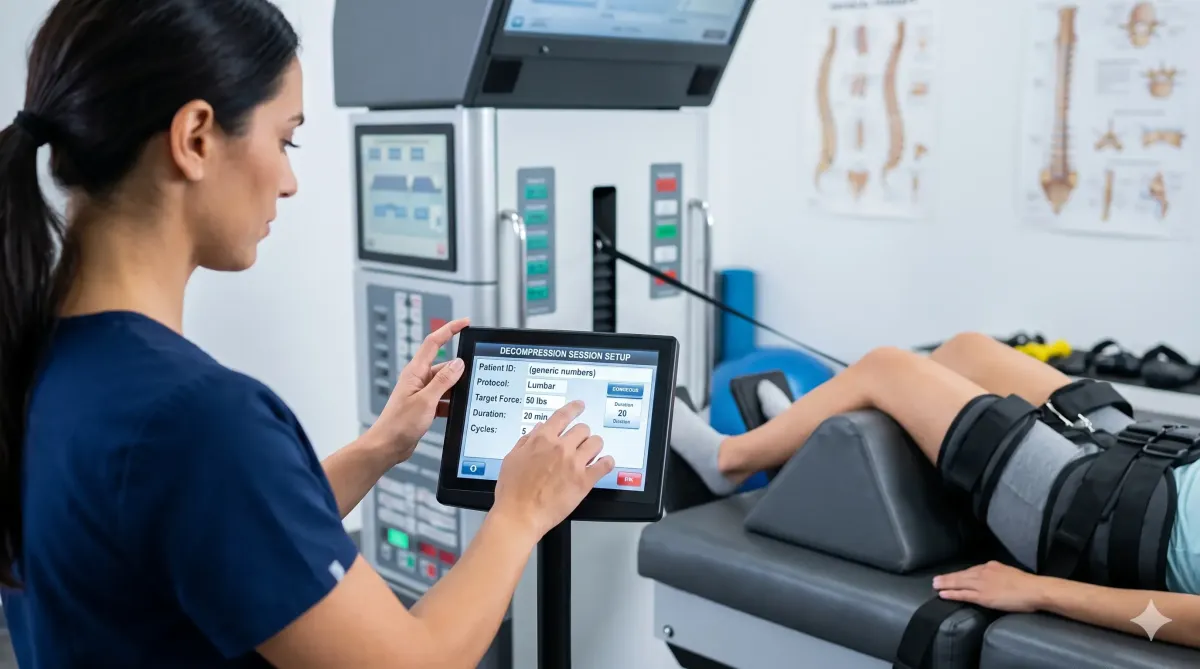
You lie comfortably on the decompression table, secured with a supportive harness. The system applies gentle, controlled stretching in cycles, easing pressure on the affected discs. Sessions usually last about 20 to 30 minutes, and most people find them relaxing.
Step 3: Combined With Rehab
Decompression works best as part of a complete plan. We pair it with targeted exercises that strengthen the muscles supporting your spine, plus manual therapy and posture work, so the relief lasts and the problem is less likely to return.
Step 4: Tracking Your Progress
We monitor how you respond between sessions and adjust your plan as you improve. Many patients feel meaningful relief over a series of sessions as pressure comes off the nerves and the disc begins to recover.
How Long Does It Take to See Results?
Most patients go through a series of decompression sessions over several weeks, and many begin feeling relief within the first few. Because decompression supports a gradual healing process in the disc rather than just masking pain, improvements often continue building over the course of treatment.
How quickly you respond depends on the severity and how long the problem has been present. Long-standing disc issues can take more time, but the trade-off is that decompression addresses problems that medication alone cannot touch. Doing the strengthening exercises your therapist gives you is the single biggest factor in making the relief last.
Serving Clifton and Nearby Communities
Our Clifton clinic is located at 1117 RT 46 Suite 203, which makes it convenient for patients across the area seeking relief from back and neck pain. We regularly treat residents from Clifton, Passaic, Paterson, and Wayne dealing with disc problems, sciatica, and chronic spinal pain.
NJ Rehab Experts has three more New Jersey locations as well. Our Jersey City office at 610 Washington Blvd serves Hoboken and Bayonne. Our Secaucus office at 20 Meadowlands Pkwy covers the surrounding Meadowlands area. And our West Windsor office at 186 Princeton Hightstown Rd is convenient for Princeton and East Brunswick.
No matter which clinic you choose, you receive the same expert care from our licensed doctors of physical therapy. You can find directions for all four locations on our locations page, or meet our therapists on our team page. Spinal decompression is one of several advanced treatments we offer, alongside orthopedic physical therapy and neuropathy and nerve pain care.
Frequently Asked Questions
Does spinal decompression hurt? No. Most people find the sessions comfortable and even relaxing. The stretching is gentle and gradual, and many patients feel relief during the session itself. If anything feels uncomfortable, your therapist adjusts it.
How many sessions will I need? It varies by condition, but most patients go through a series of sessions over several weeks. Your therapist gives you a clear estimate after the initial evaluation.
Is spinal decompression safe? For appropriate candidates, yes. It is non-invasive and drug-free. Your therapist screens your history first to make sure it is safe for you, since it is not recommended in certain conditions like spinal fractures or severe osteoporosis.
Can it help me avoid back surgery? For many disc and nerve problems, decompression provides enough relief that surgery becomes unnecessary. It is one of the conservative treatments worth trying before considering an operation.
Will insurance cover spinal decompression? Coverage varies by plan and condition. Our team checks your benefits before you start so you know what to expect. You can begin on our insurance verification page.
How is decompression different from regular traction? Decompression uses a computerized system that applies precise, cyclical pressure targeted to specific spinal levels, which is more controlled and effective than basic traction for disc-related problems.
Get Relief From Back and Neck Pain
If disc pain, sciatica, or a pinched nerve has been holding you back, spinal decompression may be the non-surgical relief you have been looking for. It is gentle, drug-free, and designed to treat the source of the pain rather than just cover it up.
Call NJ Rehab Experts today at (973) 954-5113 or book your appointment online. Same-week appointments are available at most of our locations, and we will verify your insurance benefits before you arrive. With over 15 years of experience and four convenient locations across New Jersey, we are here to help you move and feel better.
