Neuropathy & Numbness Treatment in Jersey City, NJ
Neuropathy and Numbness Treatment in Jersey City, NJ
If you live in Jersey City and deal with numbness, tingling, or burning pain in your hands or feet, you may have peripheral neuropathy, and physical therapy is one of the most effective drug-free ways to manage it. The right program reduces nerve pain, restores sensation and balance, and helps you move safely again without relying on medication. At NJ Rehab Experts in Jersey City, our team uses advanced, non-surgical treatments to calm irritated nerves and rebuild the strength and stability that neuropathy takes away.
Numbness and tingling are easy to ignore at first. Maybe your feet feel a little asleep at the end of the day, or your fingers tingle when you wake up. But peripheral neuropathy tends to get worse over time when the underlying cause is not addressed, and it can quietly raise your risk of falls, balance problems, and injuries you do not feel happening.
This guide explains what neuropathy is, what causes the numbness and tingling, why physical therapy helps, and what treatment looks like at our Jersey City clinic on Washington Boulevard.
What Is Peripheral Neuropathy?
Peripheral neuropathy is damage or dysfunction in the peripheral nerves, the nerves that carry signals between your brain and spinal cord and the rest of your body. When these nerves are damaged, the signals get scrambled, which is why you feel numbness, tingling, burning, or weakness even when nothing is touching you.
It most often affects the hands and feet because those nerves are the longest in the body and the most vulnerable to damage. For a broader look at how we treat this condition across all our clinics, you can read our main guide to neuropathy and numbness treatment in New Jersey.
The symptoms tend to follow a pattern. Many people notice it first in their toes or fingers, and over time it can spread upward toward the ankles or wrists. Common symptoms include the following.
Numbness or reduced ability to feel touch, temperature, or pain. Tingling or a pins and needles sensation. Burning or sharp, shooting pain. Muscle weakness in the hands or feet. A feeling of wearing invisible socks or gloves. Loss of balance and coordination, especially in the dark.
What Causes Numbness and Tingling?
Peripheral neuropathy has many possible causes, and identifying the right one matters because it shapes your treatment. The most common causes we see in Jersey City patients include the following.
Diabetes. This is the single most common cause of peripheral neuropathy. High blood sugar over time damages the small nerves, especially in the feet.
Nerve compression or pinched nerves. A herniated disc in the neck or lower back, carpal tunnel syndrome, or sciatica can all compress nerves and cause numbness and tingling that radiates down a limb.
Injury or trauma. A car accident, fall, or sports injury can damage nerves directly or through swelling and scar tissue.
Vitamin deficiencies. Low levels of B vitamins, especially B12, can lead to nerve dysfunction.
Post-surgical nerve irritation. Some people develop numbness or tingling after a surgery near a major nerve.
Because the causes vary so widely, the first step in treatment is always a careful evaluation to figure out what is actually driving your symptoms.
Why Does Physical Therapy Help Neuropathy?
When most people think about neuropathy, they think about medication to numb the pain. But medication only masks symptoms. Physical therapy takes a different approach by improving how your nerves, muscles, and balance systems work together.
Here is why it is so effective. Physical therapy improves circulation to the affected nerves, which supports healing and reduces pain. It strengthens the muscles that weaken when nerve signals are disrupted, so you regain function and stability. It retrains your balance, which is critical because numb feet make it hard to sense the ground and dramatically raise fall risk. And it teaches you how to protect insensitive areas from injury, which matters most for the feet.
For nerve compression cases, where a pinched nerve in the spine is causing the numbness, physical therapy can relieve the pressure directly. This often overlaps with the work we do for sciatica and nerve-related back pain, since a compressed nerve root in the lower back can send numbness all the way down the leg.
What Treatments Do You Use for Neuropathy in Jersey City?
At our Jersey City clinic, neuropathy treatment is tailored to your specific cause and symptoms. Here is a comparison of the main approaches we use and what each one does.
Your therapist combines these based on what is causing your numbness rather than using the same routine for everyone.
What Does Neuropathy Treatment Look Like at Our Jersey City Clinic?
When you come to NJ Rehab Experts in Jersey City for numbness and tingling, your care follows a clear path.
Step 1: Comprehensive Nerve and Balance Evaluation
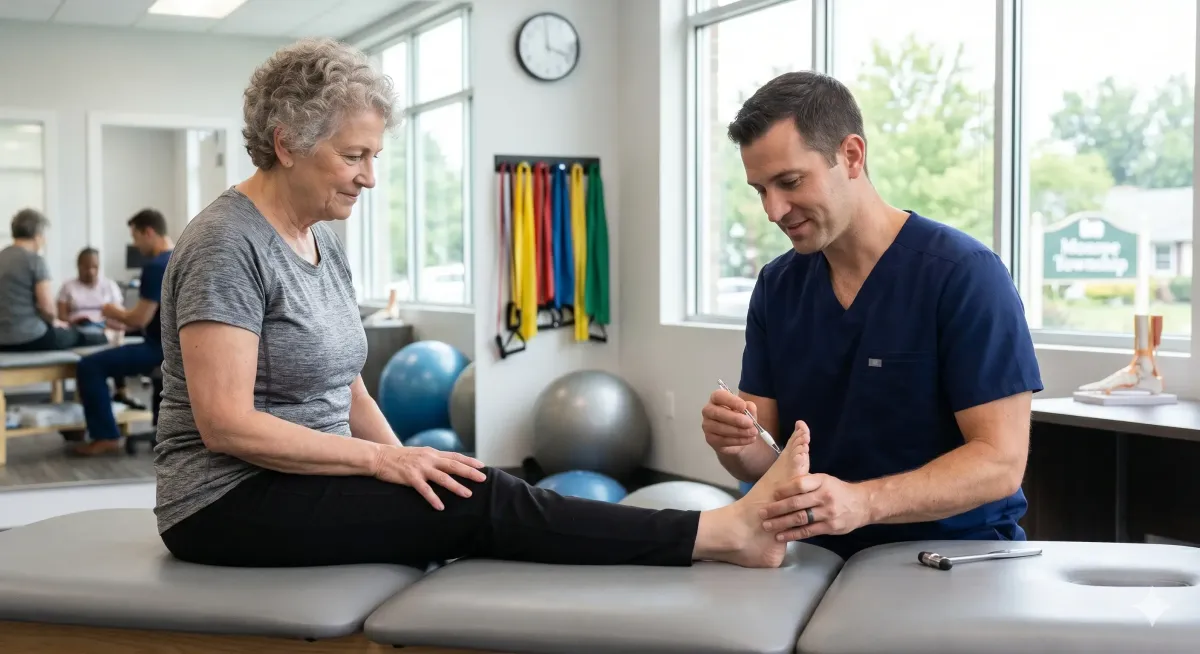
Your therapist reviews your medical history, asks about your symptoms and when they started, and tests your sensation, reflexes, strength, and balance. This helps identify whether your neuropathy comes from diabetes, a pinched nerve, an injury, or another cause.
Step 2: A Personalized Treatment Plan
Based on the evaluation, your therapist builds a plan that targets your specific cause and symptoms. Someone with diabetic neuropathy in the feet needs a different plan than someone whose numbness comes from a pinched nerve in the neck.
Step 3: Active Treatment and Education
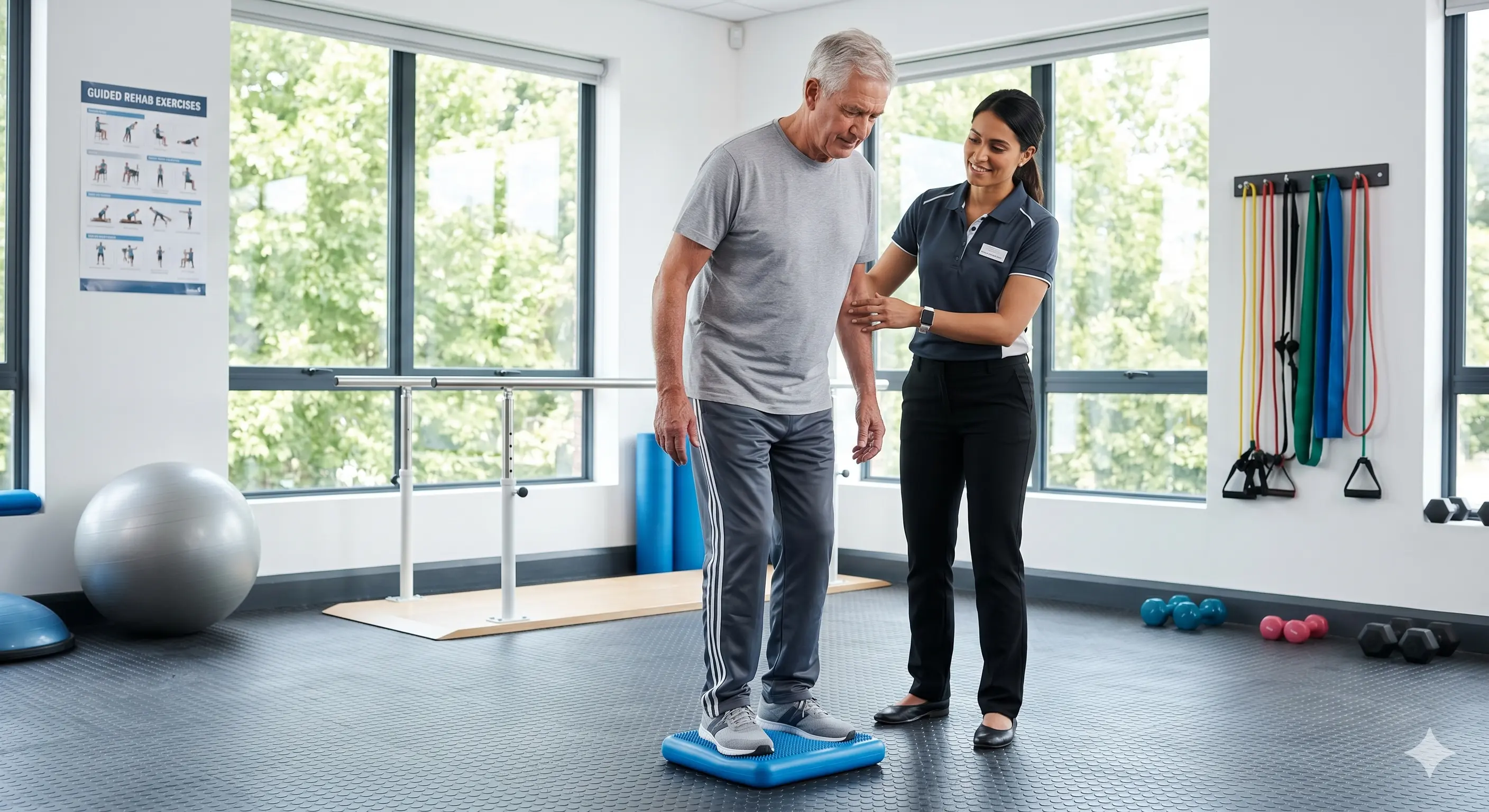
Your treatment combines hands-on care, targeted exercise, balance retraining, and the advanced modalities listed above. Just as important, we teach you how to care for numb areas at home, check your feet, and reduce your fall risk in daily life.
Step 4: Progress Tracking
We monitor your sensation, strength, and balance over time and adjust your plan as you improve. Neuropathy is often a longer-term condition, so ongoing measurement matters.
How Long Does It Take to See Results?
Recovery depends heavily on the cause and how long the neuropathy has been present. Many patients begin noticing better balance and reduced pain within the first few weeks of consistent therapy. Nerve compression cases, like numbness from a pinched nerve, often improve faster once the pressure is relieved. Diabetic and long-standing neuropathy usually responds more gradually and benefits from ongoing management.
The most important factors are starting early, attending sessions consistently, following your home program, and managing any underlying condition like diabetes alongside your therapy. The longer nerve damage goes unaddressed, the harder it is to reverse, which is why getting evaluated sooner rather than later makes a real difference.
Serving Jersey City and the Surrounding Area
Our Jersey City clinic is located at 610 Washington Blvd, which makes it convenient for patients across the city and nearby communities. We regularly treat residents from Jersey City, Hoboken, and Bayonne who are dealing with numbness, tingling, and nerve pain.
NJ Rehab Experts also has three other New Jersey locations if one is closer to you. Our Clifton office at 1117 RT 46 serves Passaic, Paterson, and Wayne. Our Secaucus office at 20 Meadowlands Pkwy covers the surrounding Meadowlands area. And our West Windsor office at 186 Princeton Hightstown Rd is convenient for the Princeton and East Brunswick communities.
No matter which clinic you visit, you receive the same expert care from our licensed doctors of physical therapy. You can find directions for all four locations on our locations page, or get to know our therapists on our team page. We also treat related conditions through our balance and vestibular therapy program, which pairs naturally with neuropathy care since both focus on stability and fall prevention.
Frequently Asked Questions
Can physical therapy really help with numbness and tingling? Yes. While physical therapy cannot reverse every type of nerve damage, it improves circulation, strength, and balance, reduces nerve pain, and helps you move safely. For nerve compression cases, it can directly relieve the pressure causing the symptoms.
Is neuropathy treatment painful? No. Treatment is gentle and tailored to your comfort level. The goal is to reduce pain, not add to it. Techniques like NeuroMed electroanalgesia are designed specifically to calm nerve pain.
Do I need a referral to start? In most cases you can begin directly, though some insurance plans require a doctor's referral. Our team will check your benefits and let you know before your first visit.
My numbness is from diabetes. Can therapy still help? Yes. Diabetic neuropathy responds well to a combination of balance training, strengthening, circulation-focused exercise, and education on protecting your feet. Therapy works best alongside good blood sugar management.
Will the numbness come back after treatment? It depends on the cause. Compression-related numbness often resolves and stays away once the pressure is relieved. Chronic causes like diabetes usually need ongoing management, and therapy gives you the tools to keep symptoms under control.
How often will I need to come in? Most patients start with two to three visits per week, then taper down as they improve. Your therapist will set a realistic schedule after your evaluation.
Take the First Step Toward Relief
Numbness and tingling are not something you simply have to live with. The sooner you address the cause, the better your chances of reducing the pain, protecting your balance, and staying active and independent. Our Jersey City team is here to help you understand what is driving your symptoms and build a plan to manage them.
Call NJ Rehab Experts today at (973) 954-5113 or book your appointment online. Same-week appointments are available at most of our locations, and we will verify your insurance benefits before you arrive. With over 15 years of experience and four convenient locations across New Jersey, we are here to help you feel like yourself again.
