Posture Correction Therapy in NJ | NJ Rehab Experts
Posture Correction Therapy: Fix the Root Cause of Your Neck, Back, and Shoulder Pain
You have probably heard it your entire life: sit up straight, stop slouching, watch your posture. But what if your posture problems are not just a bad habit? For many people, poor posture is the result of muscle imbalances, joint stiffness, and years of repetitive positions that have physically changed how their body holds itself. Posture correction therapy through physical therapy addresses these structural causes and gives your body the strength and mobility it needs to maintain proper alignment on its own.
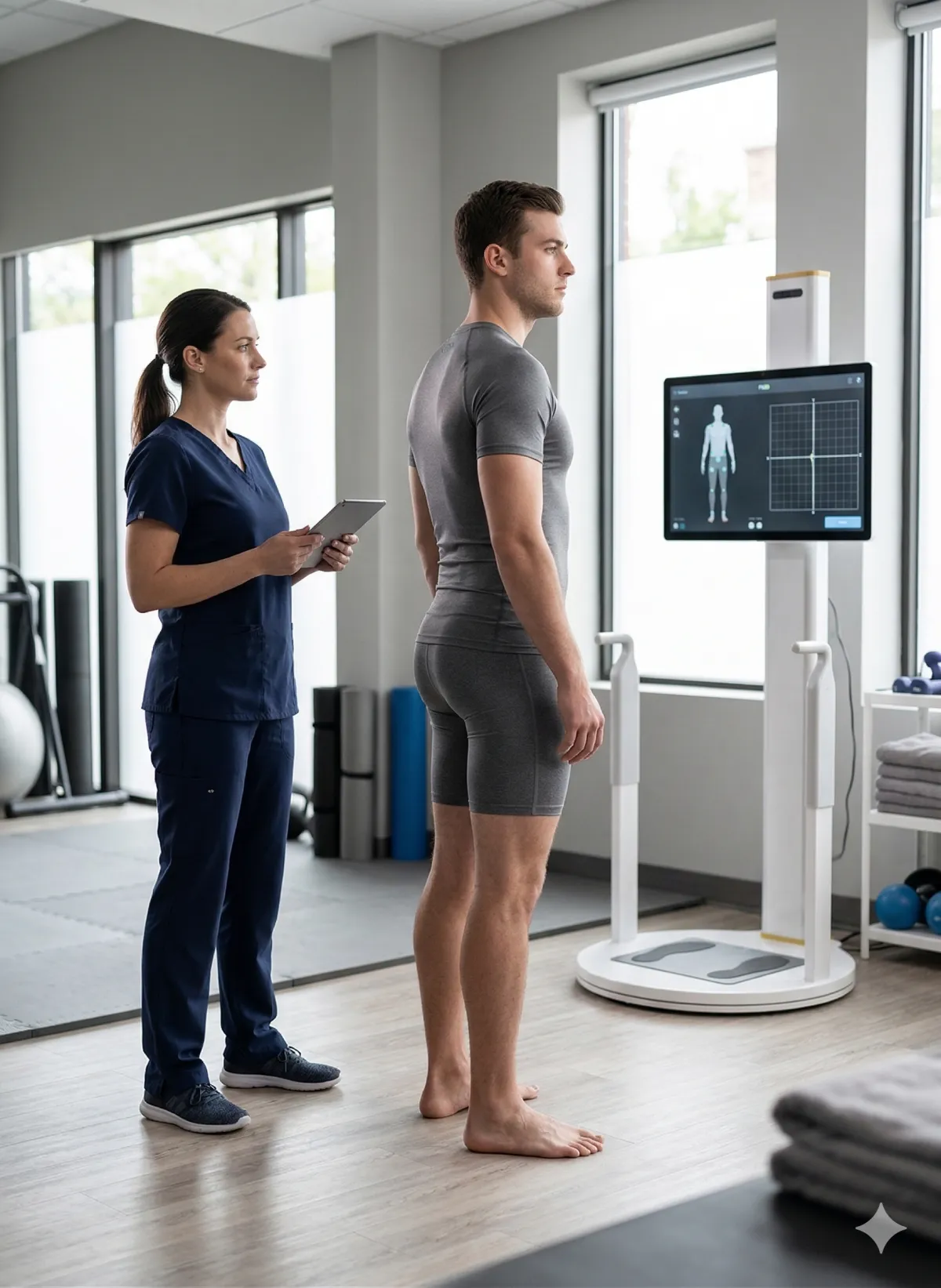
At NJ Rehab Experts, we use a combination of Fit3D body scanning technology, hands-on manual therapy, and targeted strengthening to help patients across New Jersey correct their posture and eliminate the pain that comes with it. If you have been dealing with chronic neck pain, upper back tension, headaches, or shoulder problems that keep coming back despite treatment, your posture may be the missing piece.
How Poor Posture Develops
Nobody wakes up one morning with bad posture. It develops gradually over months and years through repeated positions and habits that slowly reshape how your muscles and joints function.
Desk Work and Screen Time
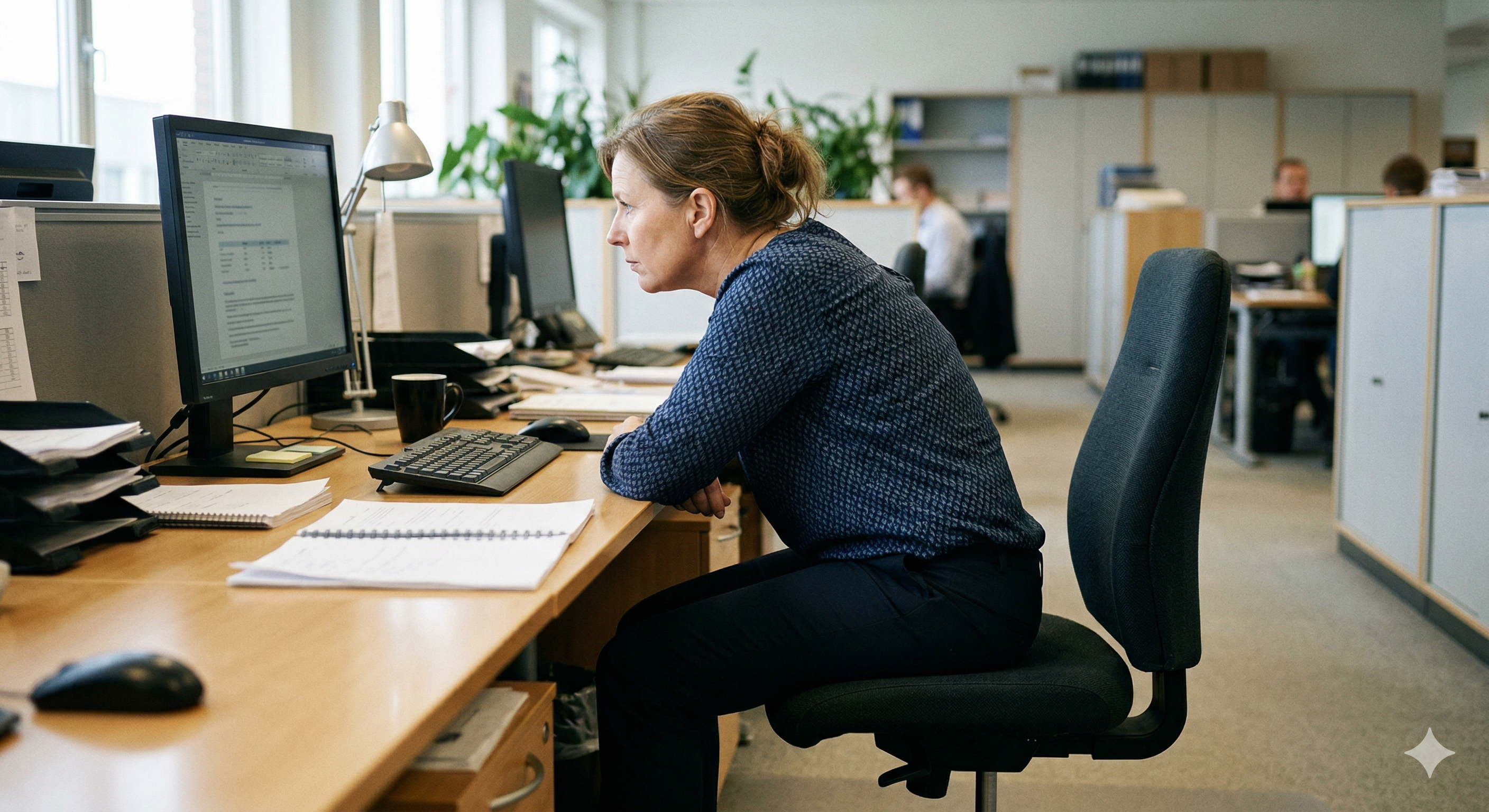
This is the single biggest driver of posture problems in adults. Sitting at a desk for 8 or more hours a day with your head forward, shoulders rounded, and upper back curved trains your body to hold those positions even when you stand up. The muscles in the front of your chest and neck become short and tight. The muscles in your upper back and deep neck become long and weak. Over time, this imbalance becomes your default posture.
Phone and Tablet Use
Looking down at your phone creates what is commonly called "text neck." Your head weighs roughly 10 to 12 pounds when it is balanced directly over your spine. For every inch your head shifts forward, the effective load on your neck muscles doubles. At a typical phone-viewing angle, your neck muscles are supporting the equivalent of 40 to 60 pounds. Do that for hours every day and the structural changes add up quickly.
Aging and Deconditioning
As we age, the muscles that support upright posture naturally weaken, especially if we are not actively strengthening them. The thoracic spine (upper back) stiffens, disc height decreases, and gravity gradually pulls the body forward. Without intervention, this progression accelerates.
Injury and Pain Avoidance
After an injury, your body naturally shifts into protective positions to avoid pain. A shoulder injury might cause you to hunch forward. A back injury might cause you to lean to one side. These compensatory patterns often persist long after the original injury heals, creating new posture problems and new pain.
Occupational Demands
Certain jobs create specific posture challenges. Dentists and surgeons spend hours leaning forward. Hairdressers work with elevated arms. Truck drivers sit for extended periods in fixed positions. Warehouse workers develop imbalances from repetitive lifting patterns. Understanding your occupational demands is essential for creating an effective posture correction plan.
What Poor Posture Does to Your Body
Poor posture is not just a cosmetic issue. It has real, measurable effects on your musculoskeletal system.
Neck pain and headaches. Forward head posture strains the muscles at the base of your skull and the back of your neck. This is one of the most common causes of tension headaches and cervicogenic headaches. The suboccipital muscles, upper trapezius, and levator scapulae become chronically tight, creating trigger points that refer pain into the head.
Upper back and shoulder pain. Rounded shoulders and a curved upper back compress the structures in the front of the shoulder and stretch the muscles in the upper back beyond their comfortable range. This leads to shoulder impingement, rotator cuff irritation, and chronic mid-back pain.
Lower back pain. Poor posture in the upper body affects the lower back by changing the position of the pelvis and increasing stress on the lumbar discs and joints. Many patients with chronic low back pain discover that their posture is a major contributing factor.
Reduced breathing capacity. A slouched posture compresses the rib cage and restricts the diaphragm's ability to move fully. This reduces your breathing efficiency, which can affect energy levels, exercise tolerance, and even anxiety.
Nerve compression. Forward head posture and rounded shoulders can narrow the spaces where nerves exit the spine and pass through the shoulder, leading to numbness, tingling, or pain in the arms and hands.
How We Assess and Treat Posture at NJ Rehab Experts
Fit3D Body Scanning
One of the things that makes our posture correction program different is our use of Fit3D body scanning technology. This system captures a complete 3D model of your body and provides precise measurements of your posture, including forward head position, shoulder height asymmetry, spinal curvature, hip alignment, and overall body symmetry.
These objective measurements serve two purposes. First, they help your therapist identify exactly where your posture deviations are and how severe they are. Second, they give us a baseline to compare against as treatment progresses. Patients love being able to see measurable improvement in their posture over time. It is one thing to be told your posture is improving. It is another thing entirely to see the numbers change.
Manual Therapy
Your therapist uses hands-on techniques to address the joint stiffness and soft tissue restrictions that are holding your body in poor alignment. This includes thoracic spine mobilization to improve upper back extension, cervical spine mobilization to restore normal neck mechanics, pectoral and anterior shoulder stretching and release, and soft tissue work on tight neck and upper back muscles.
For patients with significant muscle tension and trigger points, we also offer dry needling. The upper trapezius, levator scapulae, suboccipital muscles, and pectorals are common areas where dry needling provides fast relief from posture-related tension and pain.
Strengthening the Right Muscles
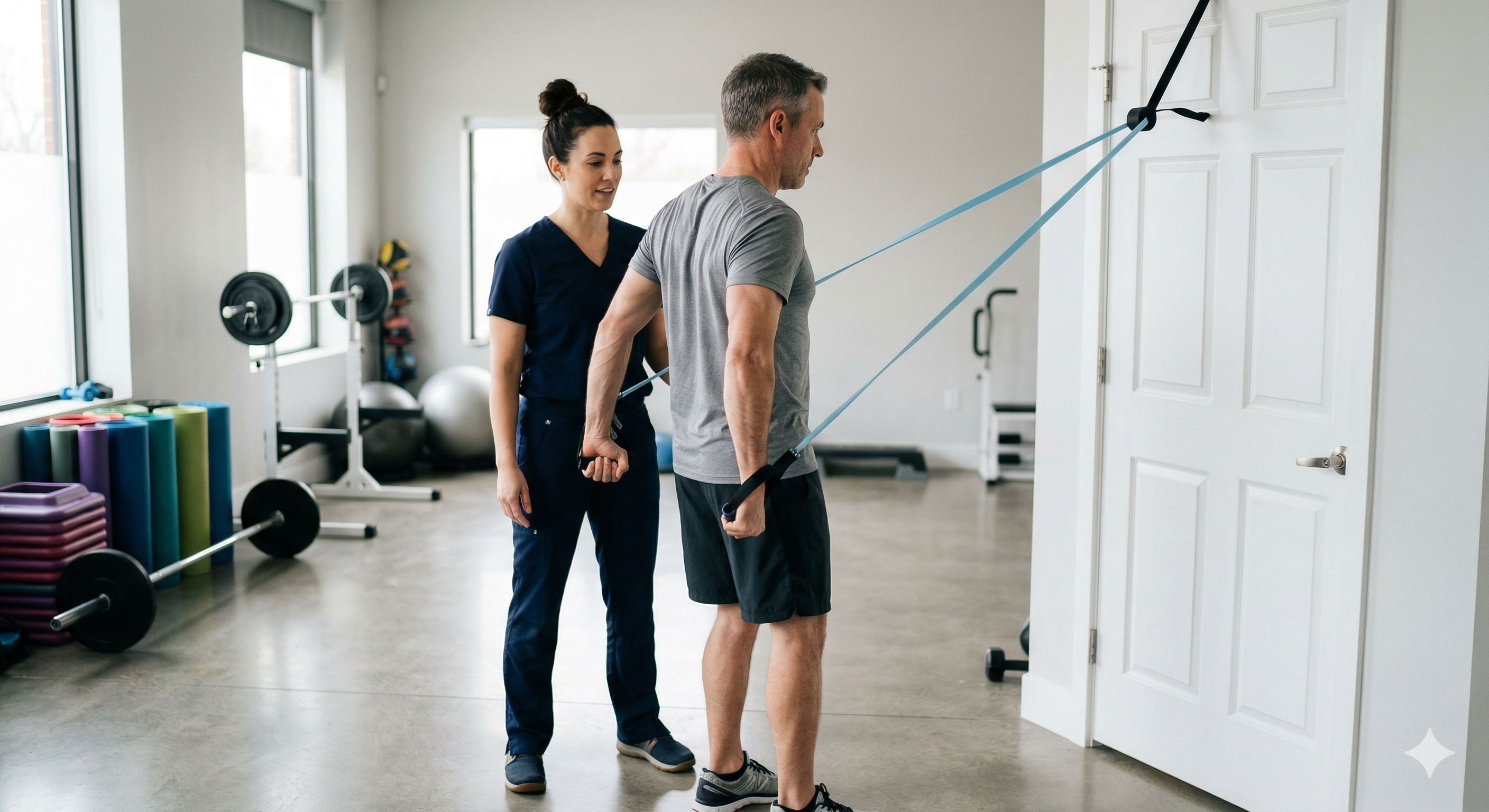
The core of posture correction is strengthening the muscles that pull your body into proper alignment and have become weak from disuse. Your program will focus on deep cervical flexor strengthening (the muscles that hold your head back over your spine), scapular retractor and lower trapezius strengthening (the muscles that pull your shoulder blades back and down), thoracic extensor strengthening (the muscles that straighten your upper back), core stabilization (the foundation that supports your entire spine), and hip and glute strengthening (which affects pelvic alignment and lower back posture).
These exercises start simple and progress as your strength improves. Your therapist will make sure you are performing them with correct form, because doing posture exercises with bad form reinforces the same patterns we are trying to fix.
Ergonomic Assessment and Guidance
Fixing your posture in the clinic is only half the solution. If you go back to the same desk setup, the same phone habits, and the same sleeping position, your posture will regress. That is why ergonomic education is a key part of our program.
Your therapist will discuss your workstation setup, including monitor height, chair position, keyboard and mouse placement, and how to set up your desk for neutral posture. We also cover phone and tablet habits, driving posture, sleeping positions and pillow selection, and exercise and gym form corrections.
The goal is to create an environment that supports good posture rather than working against it.
What to Expect During Posture Correction Treatment
Most posture correction programs run for 6 to 12 weeks, depending on the severity of the postural deviation and how long it has been present.
During the first 2 to 4 weeks, the focus is on reducing pain, releasing tight structures, and beginning gentle activation of weak muscles. Many patients notice a reduction in neck pain and headaches during this phase.
During weeks 4 to 8, the focus shifts to progressive strengthening and postural retraining. You will notice that maintaining good posture requires less conscious effort as the muscles get stronger.
During the final phase, we work on integrating your new posture into your daily activities, work environment, and exercise routine. Your therapist will repeat the Fit3D scan so you can see your objective improvement.
We typically recommend two visits per week during the active treatment phase, then reduce to once per week as you transition to independent maintenance. Your home exercise program is critical throughout and will evolve as your needs change.
Who Benefits from Posture Correction Therapy?
Posture correction is not just for people who look slouched. Many patients with excellent-looking posture have subtle imbalances that are causing pain. You should consider posture correction therapy if:
You work at a desk or computer for more than 4 hours per day
You experience chronic neck pain, upper back pain, or headaches
You have shoulder pain that keeps returning despite treatment
You notice your head sits forward when you see yourself from the side
You have numbness or tingling in your arms or hands
You feel stiff and tight in your upper back and chest
You want to prevent age-related posture decline
You are an athlete whose performance is being affected by movement asymmetries
Posture Correction Across New Jersey
NJ Rehab Experts provides posture correction therapy with Fit3D body scanning at all four of our locations in Jersey City, Clifton, Secaucus, and West Windsor.
Our Jersey City clinic serves patients from Hoboken and Bayonne, many of whom deal with posture issues from desk jobs and long commutes. Our Clifton location is convenient for patients from Passaic, Paterson, and Wayne. And our West Windsor clinic treats patients from East Brunswick and Princeton.
We also treat conditions closely related to posture including orthopedic injuries, neck and shoulder pain, neuropathy, balance problems, and geriatric rehabilitation.
Visit our locations page or meet our team.
Fix Your Posture. Fix Your Pain.
If poor posture is the root cause of your pain, no amount of massage, medication, or rest will fix it permanently. You need to change the structural imbalances that are holding your body in the wrong position. That is exactly what posture correction therapy does.
Call NJ Rehab Experts today at (973) 954-5113 or book your appointment online.
Same-week appointments are available at most locations. Our staff can verify your insurance benefits before your first visit through our insurance verification page.
Over 400 five-star reviews. Over 15 years of experience. Four locations across New Jersey. Let us help you stand taller and live without pain.
