Shockwave Therapy in Clifton, NJ | NJ Rehab Experts
Shockwave Therapy in Clifton, NJ
If you are dealing with chronic tendon pain, plantar fasciitis, or an injury that just will not heal, shockwave therapy in Clifton offers a non-surgical, drug-free way to jump-start your body's natural healing. It uses focused acoustic waves to stimulate blood flow and tissue repair in the exact spot that hurts, and most patients need only a handful of sessions. At NJ Rehab Experts in Clifton, we use shockwave therapy to treat stubborn pain that has not responded to rest, medication, or standard treatment.
Some injuries heal on their own. Others dig in and stay for months, a sore Achilles that flares every morning, a tennis elbow that will not quit, heel pain that makes the first steps out of bed miserable. When pain becomes chronic, it usually means the tissue has stopped healing properly on its own. That is exactly the problem shockwave therapy is designed to solve.
This guide explains what shockwave therapy is, what it treats, whether it hurts, and what to expect at our Clifton clinic.
What Is Shockwave Therapy?
Shockwave therapy, also called extracorporeal shockwave therapy or ESWT, is a treatment that delivers high-energy acoustic waves into injured tissue through the surface of your skin. These pulses of energy create a controlled micro-response in the tissue, which restarts and speeds up your body's own healing process.
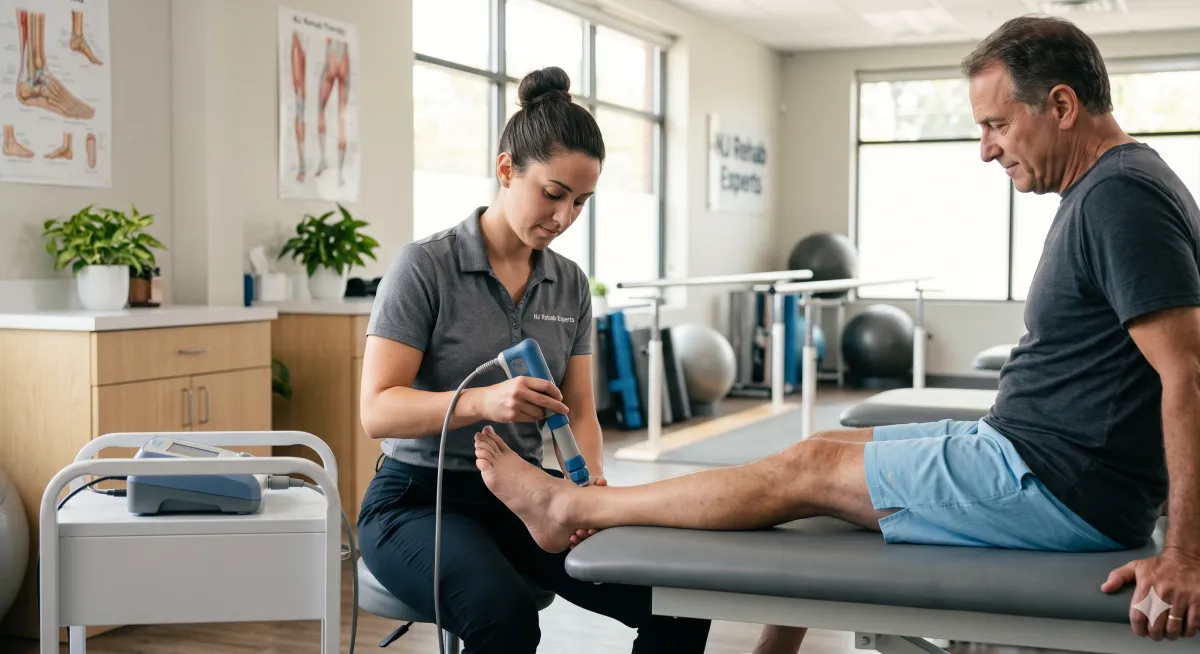
It is completely non-invasive. There are no needles, no incisions, and no medication. The waves are delivered through a handheld device that your therapist moves over the treatment area. Most sessions take about 10 to 15 minutes.
The therapy works especially well for chronic soft tissue injuries, the kind that have lasted weeks or months and have not improved with rest or other treatments. By increasing blood flow and stimulating cell repair in the area, shockwave therapy helps tissue that has been stuck in a cycle of pain finally start to heal.
What Conditions Does Shockwave Therapy Treat?
Shockwave therapy is most effective for chronic tendon and soft tissue problems. At our Clifton clinic, the conditions we treat most often with it include the following.
Plantar fasciitis. The stubborn heel pain that is worst with your first steps in the morning. Plantar fasciitis is one of the conditions shockwave therapy treats most successfully.
Achilles tendinopathy. Chronic pain and stiffness in the Achilles tendon, common in runners and active people.
Tennis elbow and golfer's elbow. Pain on the outside or inside of the elbow from overuse, which often lingers for months.
Rotator cuff and shoulder tendon pain. Calcific tendinitis and other chronic shoulder tendon issues respond well to the treatment.
Jumper's knee (patellar tendinopathy). Pain just below the kneecap, common in athletes who run and jump.
Chronic back and hip pain. When the source is tight, irritated soft tissue rather than the spine itself, shockwave can help release it. This often works alongside spinal and back pain rehabilitation.
If you have had pain in one of these areas for more than a few weeks and it has not improved, you are likely a good candidate.
How Does Shockwave Therapy Compare to Other Treatments?
People often ask how shockwave stacks up against the other options for chronic pain. Here is a simple comparison.
The appeal of shockwave is that it treats the root cause without drugs or surgery, and it is often the step that helps people avoid more invasive options.
Does Shockwave Therapy Hurt?
This is the question we hear most. During treatment you will feel a tapping or pulsing sensation on the skin, and some tenderness in the area being treated, especially right over the sore spot. Most people describe it as uncomfortable but tolerable, and your therapist can adjust the intensity to keep it manageable.
The sessions are short, around 10 to 15 minutes. Some people feel a little sore for a day or so afterward, similar to the feeling after a good workout. That mild soreness is actually a sign the treatment is doing its job and stimulating a healing response.
What Does Shockwave Treatment Look Like at Our Clifton Clinic?
When you come to NJ Rehab Experts in Clifton for shockwave therapy, here is how it works.
Step 1: Evaluation
First, your therapist confirms shockwave is right for you. We assess the injured area, review how long you have had the problem, and rule out anything that would make the treatment unsuitable. Shockwave works best as part of a complete plan, so we look at the whole picture.
Step 2: The Treatment Sessions
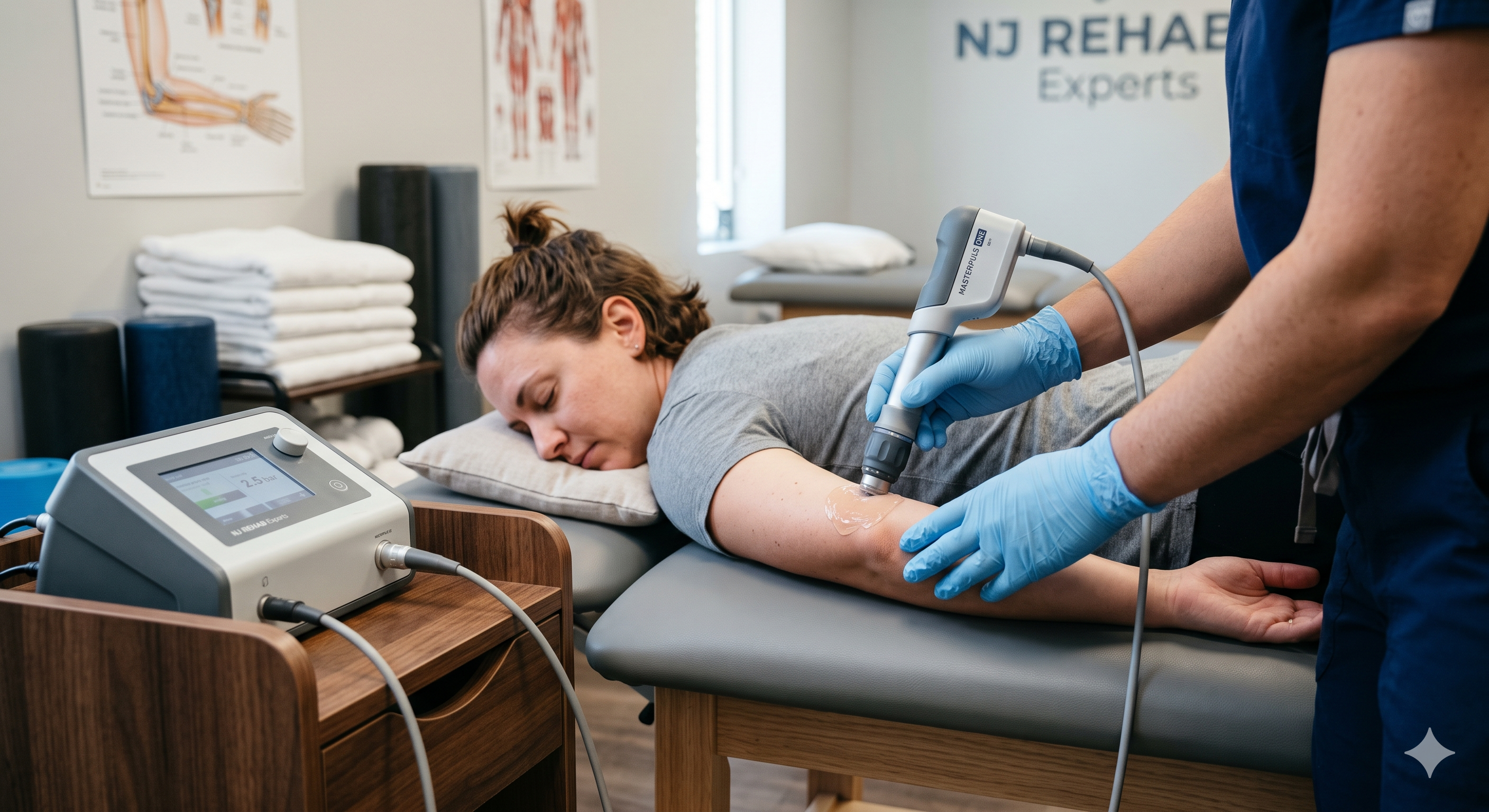
Each session is quick. Your therapist applies a gel to the area and moves the shockwave device over it, delivering the acoustic pulses. Most people need a series of three to six sessions, usually spaced about a week apart.
Step 3: Combined With Rehab
Shockwave works best when paired with the right exercises. We combine it with targeted strengthening and stretching so the healing tissue rebuilds properly and the problem does not come back. This is the part that makes the results last.
Step 4: Tracking Your Progress
We monitor how the area responds between sessions and adjust as needed. Many patients notice improvement within the first two or three sessions, with continued gains over the following weeks as the tissue heals.
How Soon Will You See Results?
Most patients begin to feel improvement within two to three sessions, though the full healing response continues for several weeks after the treatment course finishes. Because shockwave stimulates a gradual biological healing process rather than just masking pain, the benefits often keep building even after your last session.
The conditions that have been present the longest can take a little more time, but the trade-off is that shockwave addresses problems that other treatments often cannot touch. Following the exercise plan your therapist gives you makes a real difference in how complete and lasting the result is.
Serving Clifton and Nearby Communities
Our Clifton clinic is located at 1117 RT 46 Suite 203, which makes it convenient for patients across the area looking for shockwave therapy. We regularly treat residents from Clifton, Passaic, Paterson, and Wayne dealing with chronic tendon and soft tissue pain.
NJ Rehab Experts has three more New Jersey locations as well. Our Jersey City office at 610 Washington Blvd serves Hoboken and Bayonne. Our Secaucus office at 20 Meadowlands Pkwy covers the surrounding Meadowlands area. And our West Windsor office at 186 Princeton Hightstown Rd is convenient for Princeton and East Brunswick.
No matter which clinic you choose, you receive the same expert care from our licensed doctors of physical therapy. You can find directions for all four locations on our locations page, or meet our therapists on our team page. Shockwave is one of several advanced treatments we offer, alongside neuropathy and nerve pain care and full regenerative rehabilitation.
Frequently Asked Questions
How many shockwave sessions will I need? Most patients need a series of three to six sessions, spaced about a week apart. Your therapist will give you a clear estimate after the initial evaluation based on your condition.
Is shockwave therapy safe? Yes. It is a non-invasive, drug-free treatment that has been used for chronic tendon and soft tissue conditions for years. Your therapist will check that it is appropriate for you before starting.
Is there any downtime after treatment? No real downtime. You may feel mild soreness in the area for a day or so, similar to post-workout soreness, but you can return to your normal day right away. Your therapist will advise on any activity to ease off temporarily.
Who should not have shockwave therapy? It is not recommended for certain situations, such as over areas with active infection, certain blood-clotting conditions, or during pregnancy. We screen for all of this during your evaluation.
Will insurance cover shockwave therapy? Coverage varies by plan and condition. Our team will check your benefits before you start so you know what to expect. You can begin that process on our insurance verification page.
How is shockwave different from a cortisone shot? A cortisone injection reduces inflammation and pain for a while but does not heal the tissue. Shockwave stimulates the tissue to actually repair itself, which is why the results tend to last longer.
Get Relief From Stubborn Pain
If you have been living with chronic tendon or soft tissue pain that just will not heal, shockwave therapy may be the step that finally gets you better. It is non-surgical, drug-free, and designed to treat the kind of pain that other approaches leave behind.
Call NJ Rehab Experts today at (973) 954-5113 or book your appointment online. Same-week appointments are available at most of our locations, and we will verify your insurance benefits before you arrive. With over 15 years of experience and four convenient locations across New Jersey, we are here to help you heal.
